This guide explains Aquila in a practical, evidence-aware way, covering meaning, typical applications, and how to evaluate offerings. Objectively, “Aquila” is widely used as a name connected to the Latin term for eagle, and it appears across branding, research cataloging, and product lines. You’ll also find a structured comparison table, sourcing conditions, and FAQs to support informed decisions.

Aquila is a name that appears across domains—ranging from classical and symbolic references (eagle imagery in Latin usage) to modern branding and product naming—so the top way to “use Aquila” depends on the context in which you encounter it. This article treats Aquila as a selector problem: first identify what “Aquila” refers to in your specific case (symbol, system, product line, or dataset label), then evaluate quality, documentation, provenance, and compatibility before purchase, adoption, or research use. Instead of relying on marketing language alone, use a structured due-diligence approach and clear requirements.
In general usage, Aquila is strongly associated with the Latin word for “eagle,” and therefore it is often chosen for themes such as strength, vision, or elevation. Because “Aquila” is concise and memorable, it also functions as a convenient identifier for projects, collections, product families, and technical components. In practice, two people can say “Aquila” and mean different things: one may refer to an eagle-themed brand, while another may reference an instrument, vessel, organization, or catalog entry.
From an industry perspective, this naming pattern is not unusual. Many sectors—technology, heritage, defense history, scientific classification, and consumer goods—select names with classical roots to communicate credibility, continuity, or a distinct identity. The main risk for buyers and adopters is ambiguity: if you don’t confirm what Aquila denotes in the specific listing or document, you may evaluate the wrong item or misunderstand specifications.
To handle that ambiguity, think of Aquila the way you would think of an acronym or an internal code name: the label is only meaningful once you tie it to a concrete definition—model number, revision, dataset version, documentation set, or institutional reference. Once you do that, evaluation becomes possible because you can compare like with like and confirm claims with evidence.
Because “Aquila” is both evocative and flexible, it tends to spread across contexts. A single word can be used as a brand, a model family name, a code word in research, and a conceptual label in a narrative or educational environment. This is precisely why due diligence is necessary: the word itself rarely provides enough technical detail to assess performance.
When an “Aquila” appears as a product or service name, treat it the way procurement teams treat any critical label: by validating documentation, measurable performance, and supplier accountability. Industry professionals often use a simple principle—traceability beats slogans. That means confirming where the name appears (manual, certificate, technical sheet, SKU/part number, or contract), what standards apply, and whether the supplier can provide verifiable evidence.
In practice, traceability is not merely “nice to have.” It is the mechanism that allows you to answer questions such as: What exact configuration was delivered? Which manufacturing batch produced it? What tests were performed, and under what conditions? If there is a failure or audit requirement, can you show the chain of documentation from your organization back to the manufacturer’s records?
Without traceability, you may experience avoidable outcomes: delays during warranty handling, inability to reproduce research results, failure to meet compliance expectations, or purchasing an item that looks similar but behaves differently.
To evaluate an Aquila-branded offering objectively, focus on documentation quality and operational fit. A reliable supplier should provide at least the following:
Notice what is missing from this list: “impressive claims,” “legendary performance,” “eagle-grade quality,” and similar marketing phrases. Those may be true in a general sense, but they are not actionable. Documentation turns vague claims into verifiable statements.
When documentation is incomplete, you should ask targeted questions until you receive specific answers. If a supplier cannot answer those questions, treat that inability as a risk signal. Even if the product works initially, poor documentation can become expensive during maintenance, repairs, compliance audits, and incident investigations.
Aquila is top considered through a use-case lens. Ask what you are trying to achieve—performance, reliability, aesthetics, symbolic value, research categorization, or ecosystem integration. The correct choice is the one that aligns with your constraints and measurable requirements, not the one that uses the very persuasive language.
Use-case selection typically includes at least these dimensions:
When Aquila is evaluated with these dimensions, the label becomes less of a mystery and more of a pointer to a specific, testable artifact.
Because “Aquila” is a versatile name, it shows up in different ways. Below are typical categories where professionals may encounter it. Use this as a guide to interpret what you see, not as an assumption about any specific product.
Some Aquila references are primarily branding choices. In these cases, the relevant evaluation criteria are design intent, brand consistency, and the credibility of the company behind the name. If a product is functional, confirm that functional requirements are met with specifications and testing information.
For branding-first items—such as apparel, lifestyle goods, or a marketing-heavy consumer device—documentation may still exist, but the emphasis may be different. You should still demand enough information to evaluate safety, materials, warranty terms, and any performance claims that matter in your context (for example, weather resistance, battery life under defined conditions, or manufacturing origin).
In technical markets, Aquila may label a model line—so you should evaluate performance metrics, environmental ratings, maintenance schedules, and compatibility. If multiple models exist, compare within the same measurement framework to avoid mixing apples and oranges.
This is especially important because manufacturers may test under different conditions. For example, one model might publish performance at a particular temperature, while another publishes average results under different test durations. Without a consistent baseline, comparison becomes misleading.
If Aquila refers to a system rather than a single product, also evaluate the architecture: required subsystems, data flows, power requirements, failure modes, and integration approach. A system can “work” on paper while still being operationally difficult if key integration elements are undocumented or require proprietary interfaces without clear licensing terms.
Researchers may use Aquila as a term in catalogs, project names, or classification systems. Here the key is to verify definitions, metadata standards, and reproducibility. If the label maps to datasets or processes, check versioning and whether documentation clearly describes inclusion criteria.
In research settings, the same label can refer to different dataset releases or experimental variants. Therefore, ask:
Without that, “Aquila” may become a moving target. Your study might be undermined not by a poor analysis method, but by an inconsistent dataset definition across time.
In cultural contexts, Aquila can appear in museum collections, historical discussions, or educational materials. The evaluation focuses on provenance, context, and how confidently the reference is supported by sources.
If you are using Aquila in a cultural or educational project, you should treat it like a citation problem. Who coined the term? What source is being referenced? Are there primary documents or credible secondary sources? Does the context match the original meaning? Because “Aquila” is historically charged as “eagle,” misattribution can occur when the same word is used casually without supporting references.
“Aquila” is international in feel, but interpretation can vary by region. For example, in European-language contexts, readers may immediately recognize the Latin “eagle” association. In professional settings, however, the decisive factor is still documentation and traceability—whether you are sourcing through a regional distributor or evaluating a local integration.
For audiences in English-speaking markets, it is common to ask for “exact model details,” while some local procurement practices may emphasize authorization channels and invoice traceability. Both concerns matter, but they appear differently in different regions and procurement cultures.
If you are dealing with localized versions of Aquila (for example, rebranded components, region-specific compliance packaging, or language-localized documentation), ensure that you are comparing the same baseline configuration. Localizations can change firmware, documentation scope, warranty terms, or compliance statements.
You may encounter listings that mention price information, supplier identity, and location-specific availability. The responsible approach is to treat any price as conditional—dependent on model version, configuration, shipping scope, warranty coverage, and included accessories.
If a listing references a supplier, verify whether they are the manufacturer, an authorized distributor, or a reseller. For warranty integrity, authorization matters in many industries. If warranty claims require an authorized channel, then buying through an unofficial channel can reduce your practical protection even if the product appears identical.
For location-specific notes, confirm lead times, service coverage, and whether the supplier can provide local compliance documentation if required. Some markets require proof of conformity, registration, or documentation translations. If those are not included, delays can occur.
Important: If you are given a “nearby” availability claim, confirm service reach with clear terms—what “nearby” means in delivery radius, how installation/support is handled, and whether parts availability is guaranteed for a defined period. Without verifiable terms, you risk delays.
Also watch for pricing traps that are common in ambiguous naming environments:
The table below is a practical supplement for interpreting and selecting an Aquila-related offering. It is intentionally written to help you compare options without relying on unverifiable statements. No external links are included.
| Stage | Comparison Point | What Good Looks Like | Conditions / Requirements |
|---|---|---|---|
| 1 | Definition of “Aquila” | Exact model/product ID or clear institutional/catalographic reference | Ask for the SKU/part number and intended use statement |
| 2 | Documentation quality | Up-to-date manuals, specifications, and testing/compliance references | Supplier must provide verifiable technical sheets |
| 3 | Price transparency | Itemized costs (base price, configuration, delivery, warranty, service fees) | Confirm warranty and return terms before final payment |
| 4 | Supplier legitimacy | Clear manufacturer/distributor identification and authorization status | Require proof of authorization for warranty claims when applicable |
| 5 | Compatibility and integration | Clear interface details and required accessories | Match connection standards and confirm installation requirements |
| 6 | Service and support | Defined response times, spare-part policy, and escalation path | Confirm coverage window and service-region limits |
Below is a practical, step-by-step approach commonly used by professionals when they evaluate named products or system components.
Before comparing prices or specs, confirm the exact reference. Request the model/version, serial or batch identifier (if available), and the category (product, project, or catalog label). If the name is used in more than one context, you must disambiguate.
A practical disambiguation checklist includes asking:
If the supplier cannot provide a technical identifier that maps unambiguously to the purchased item, you should consider that a fundamental blocker. “Aquila” as a single string is rarely enough to support procurement due diligence.
Collect the official specification sheet and compare measurable parameters. If two Aquila options exist, compare within the same parameter framework (same units, same test conditions, same firmware/software version, if applicable).
When specifications are compared, pay attention to how performance is measured. For technical products, ask for:
This matters because different sources might highlight different metrics. A supplier could emphasize a best-case result rather than a realistic operational range. You want the baseline that aligns with your real use environment.
Confirm who manufactured it and who is selling it. For warranty integrity, authorization matters in many industries. Ask for the documentation that ties the product identity to the manufacturer’s records.
Supplier status is not just about avoiding fraud. It also influences:
If you are evaluating an Aquila component in a system that must remain compliant over time, provenance becomes even more important. Over the lifecycle, you may need to demonstrate that changes were controlled and that replacements are original or certified equivalents.
A price is rarely the full story. Consider maintenance, replacement parts, installation effort, software licensing (if any), and downtime costs. Require a written warranty and service-coverage statement.
Total cost of ownership (TCO) typically includes:
Even if two Aquila options share similar list prices, one may have significantly higher TCO due to scarce spare parts, weak documentation, or limited service availability. Conversely, a higher initial price could be justified if support is strong and commissioning is included.
Validate performance constraints: environmental limits, power/throughput needs, required accessories, and any training or setup obligations. If the offering includes integration, ask for a compatibility matrix.
Operational fit is where ambiguous naming creates real-world risk. A device can “match” in general terms but fail in your specific operational context. For example, it might require a specific input voltage not available at your site, or it might need a software environment you don’t currently run. If those constraints aren’t documented, you may discover them only after procurement.
Therefore, you should test the assumptions behind the listing. Ask for the details you need to deploy the item safely and reliably.
Before purchase, define acceptance criteria (what you must test on arrival, who performs commissioning, and how defects are handled). This reduces disputes and improves outcomes.
Acceptance conditions can be formal or practical, but they should be written and agreed upon. Examples include:
For research datasets or pipelines labeled “Aquila,” acceptance conditions may include correctness checks, dataset schema validation, and reproducibility steps that demonstrate that you can replicate key results.
Keep records of model identity, configuration, and serial/batch numbers. In regulated or safety-critical environments, traceability can be essential for audits and incident handling.
Traceability after adoption is not simply storing receipts. It includes maintaining:
This ensures that if “Aquila” later appears in an audit, incident report, or performance evaluation, you can point to precise evidence. It also enables maintenance to use the correct reference documentation and avoids confusion between revisions.
In addition, consider how risk is managed. For critical deployments, you may require redundancy, fallback procedures, or documented maintenance intervals. For research work, you may require dataset licensing terms and reproducibility support. For consumer products, safety and return policies may be the key constraints.
Because Aquila can represent different categories, the “right” constraints depend on what you are doing. But the discipline of articulating constraints remains consistent: you are trying to prevent the most expensive form of ambiguity—unknown unknowns.
Because the term “Aquila” is used broadly, the very defensible evaluation strategy is evidence-based. In professional environments, decisions are typically aligned with quality-management principles and documented verification methods. Where certification or compliance is relevant, buyers look for recognizable standard references and test reports produced through accepted methodologies.
Evidence-based decisions can be organized in a few layers:
For general guidance on procurement and evidence-based decision-making, reputable frameworks and standards published by recognized bodies can be consulted. In addition, official regulatory or standards organizations (depending on the sector) often provide documentation on what constitutes adequate compliance evidence.
The key point is that evaluation should not rely solely on the name “Aquila.” The name is a pointer. The evidence is the proof.
To make the selection framework concrete, consider a few common scenarios where “Aquila” causes confusion.
Imagine a buyer sees “Aquila” in two listings. Both show similar descriptions, and both sellers provide photos. Without technical identifiers, the buyer might assume they are equivalent. After purchase, it becomes clear that one unit is a later revision with different firmware behavior or connector type. The buyer’s integration work fails or requires modifications.
Avoidance approach: require exact model numbers, revision codes, and interface specifications before purchase. Ask for a documentation pack that identifies the exact revision. Perform acceptance testing that includes verifying software/firmware versions and interface compatibility.
A research team downloads “Aquila” labeled data from a catalog entry. Later, they discover that “Aquila” refers to multiple releases. One release includes a different set of records due to changed labeling rules. Results shift, but the team originally attributes differences to analysis changes rather than dataset definition drift.
Avoidance approach: require dataset version identifiers, schema documentation, and preprocessing steps. Use checksums or record counts to confirm the dataset matches your referenced release. Maintain a local record of dataset version at the time analysis begins.
A reseller sells a product marketed as “Aquila” without clear manufacturer identification. The device works initially, but warranty claims become difficult because no manufacturer authorization or traceability documentation is provided. Eventually, the buyer faces downtime and replacement costs.
Avoidance approach: ask who the manufacturer is and request evidence of authorization for warranty support. Ensure serial/batch traceability ties back to manufacturer documentation. Confirm warranty handling procedures in writing before payment.
A content creator mentions “Aquila” in a historical context as if it refers to a specific symbol or organization. Later, a reviewer finds the source is ambiguous or misattributed.
Avoidance approach: when Aquila is used in cultural/heritage contexts, treat it as a citation quality problem. Prefer primary sources or credible secondary references, and clarify what “Aquila” means in your specific narrative.
When dealing with an Aquila-labeled product or dataset, you can shorten decision time by using consistent question sets. Here are questions that help you get the information that matters.
Compatibility is a frequent source of mismatch when a term like Aquila is used across multiple product families. Sellers may claim broad compatibility. But compatibility is not a marketing slogan; it is a specific set of technical requirements.
When evaluating Aquila for integration, request a compatibility matrix or at least the interface details. This can include:
For safety-critical environments, compatibility evaluation should also consider failure modes. If integration fails, what happens? Does the system degrade safely, or does it produce unsafe outputs? Documentation can help here, but in high-stakes deployments, commissioning tests may be required.
Warranty terms can be a major differentiator, but they are often misunderstood. “Aquila” might be covered under a warranty in principle, but the practical ability to obtain service depends on channel authorization, documentation requirements, and response commitments.
To prevent “paper coverage,” confirm the following:
Also consider whether you require extended coverage. For systems with high operational value, standard warranty terms might not be sufficient to protect against multi-year failure probability.
Many listings use geographic language that sounds reassuring but does not include operational specifics. If you see “nearby,” “local,” or similar claims, treat them as prompts to request definitions.
Ask for:
Then confirm these details in writing. If the information cannot be provided, consider that a risk factor and plan alternative support paths.
Buying an Aquila-branded item should include thinking about the lifecycle. Many problems arise years later due to end-of-support, firmware deprecation, undocumented configuration changes, or dataset labeling drift.
For technical systems and software-adjacent products, ask:
For research datasets labeled “Aquila,” version drift is analogous: the data definition can change. Ask:
A lifecycle view prevents you from making the common error of treating purchase-time documentation as the only evidence you will ever need.
If Aquila refers to a system that processes data or connects to networks, security and governance should be evaluated. Even if the word “Aquila” is just branding, the underlying system may still introduce data handling risks.
Key questions include:
In regulated contexts, governance also includes documentation requirements, evidence retention, and policies for change management. Again, traceability matters: you want to connect actions and updates to documentation and approvals.
Sometimes, “Aquila” is used so loosely that it cannot be assessed reliably. In those cases, the correct action is not to guess; it is to request clarification.
Examples of unresolvable ambiguity include:
If you encounter these issues, you can treat the purchase as blocked until you get the required identifiers and documents. This might feel slower, but it prevents expensive rework.
Aquila commonly refers to the Latin term for “eagle” and is frequently used as a symbolic name. In modern contexts, it can also function as an identifier for products, projects, or catalog entries, depending on the domain.
Request the exact model/product ID, version, SKU/part number, or the specific catalog reference. Check the documentation package for a definitive description that ties the name to measurable specifications and intended use.
No. Price may vary due to configuration, warranty scope, support coverage, delivery terms, and compatibility needs. A fair comparison includes total cost of ownership and documented performance under consistent conditions.
Verify who manufactures the offering, who sells it, and whether the seller is authorized for warranty and service claims. Also confirm that the supplier can provide technical documentation that matches the exact model reference.
Treat “nearby” as a claim that must be clarified. Confirm the delivery radius, lead times, service-region coverage, and the terms under which installation or support will be provided.
That depends on the industry and use case. If your application is regulated or safety-critical, ask which standards apply and request evidence such as test reports or compliance statements issued through accepted processes.
Focus on traceable documentation: official specifications, verifiable test results, and clear warranty/service terms. Avoid decisions based solely on slogans or unspecified performance claims.
If manuals or certificates do not explicitly connect to the Aquila listing’s exact model/revision, you should request correction or clarification. Inconsistent documentation can indicate the wrong revision, missing bundles, or an inaccurate listing. Do not proceed until the documentation aligns with the identifiers you plan to purchase.
It can be acceptable to use Aquila as a shorthand internally if your organization maintains a mapping document that ties “Aquila” to exact identifiers (SKU/part number, dataset version, or system revision). Without that mapping, shorthand creates the same ambiguity you are trying to avoid.
Disambiguate by specifying hierarchy: brand (company or marketing name), product family, model number, and component designation. Ask suppliers for the full part tree or BOM-like documentation so you can tie each Aquila-labeled element to a concrete specification.
Aquila is a meaningful name with classical symbolism, but in professional selection it must be treated as ambiguous until you confirm the exact reference. The very effective path is to (1) disambiguate Aquila in your context, (2) validate documentation and measurable specifications, (3) assess supplier legitimacy and service coverage, and (4) compare total value rather than price alone. With that approach, you can make decisions that stand up to scrutiny and perform reliably in real conditions.





Digio Livelo helps users connect everyday purchases with a structured rewards approach, so this guide explains what the program typically entails, what to check before enrolling, and how to evaluate it responsibly. Objectively, Digio and Livelo are commonly associated with loyalty-style ecosystems that depend on participating merchants, terms, and data handling practices.

This guide explains how to evaluate K suppliers and pricing with an industry-first, risk-aware approach. It reviews background concepts around supplier selection, cost drivers, and documentation quality, then provides a structured comparison framework. The article also covers conditions for quotes, quality checks, and decision steps designed for consistent procurement outcomes.
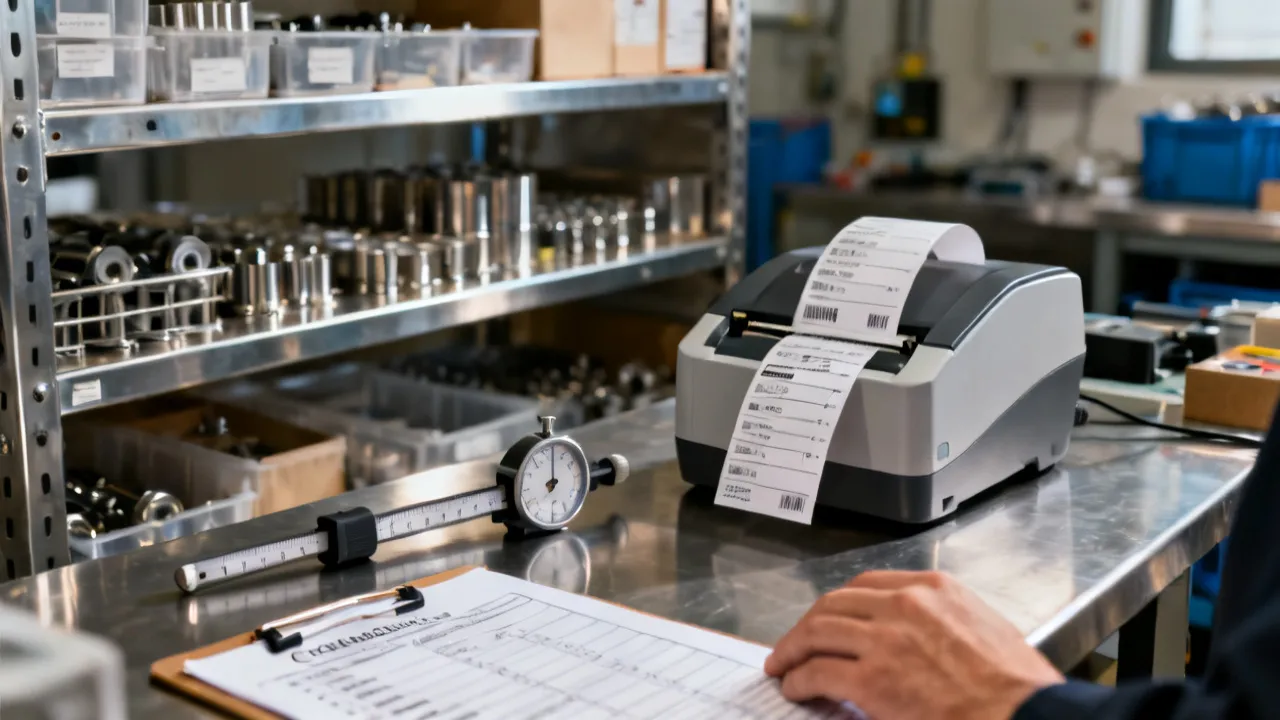
This guide explains how to evaluate 1333-related sourcing decisions using practical criteria for specification matching, documentation checks, and quality controls. Objectively, “1333” is often used as an internal part/reference number or a model code across procurement workflows, while blank quote tokens and supplier details reflect typical cataloging formats. The article outlines how to compare suppliers without relying on unverified claims.
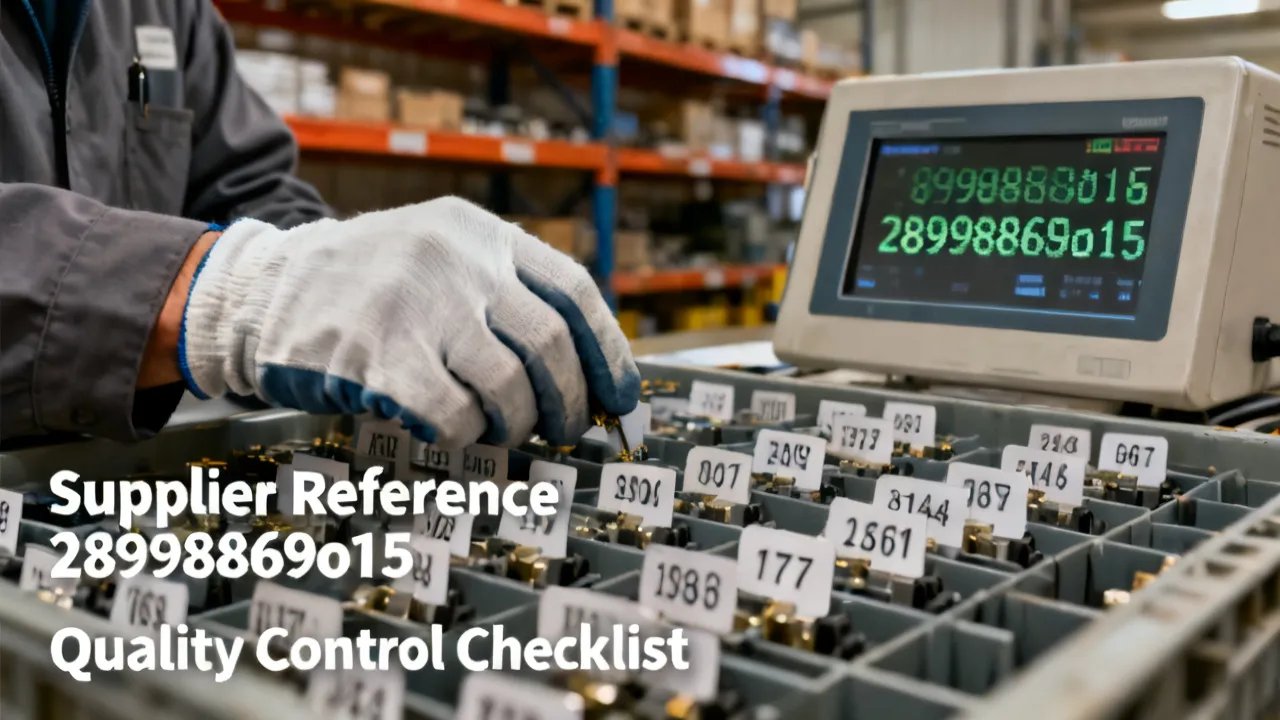
This guide explains how industry stakeholders interpret the reference code 28998869o15, assess suppliers, and evaluate cost drivers for procurement decisions. Objectively, such alphanumeric identifiers typically support inventory traceability, documentation control, and quality verification. It outlines practical evaluation steps, requirements, and FAQs to help buyers compare options using consistent criteria.

This guide explains how to evaluate the product code “692423217 53” in real sourcing and pricing workflows. Objectively, the keywords point to structured product identification, supplier matching, and cost verification practices. You’ll learn how to compare offers, confirm specifications, and reduce ordering errors—using industry-standard documentation and requirement checks.
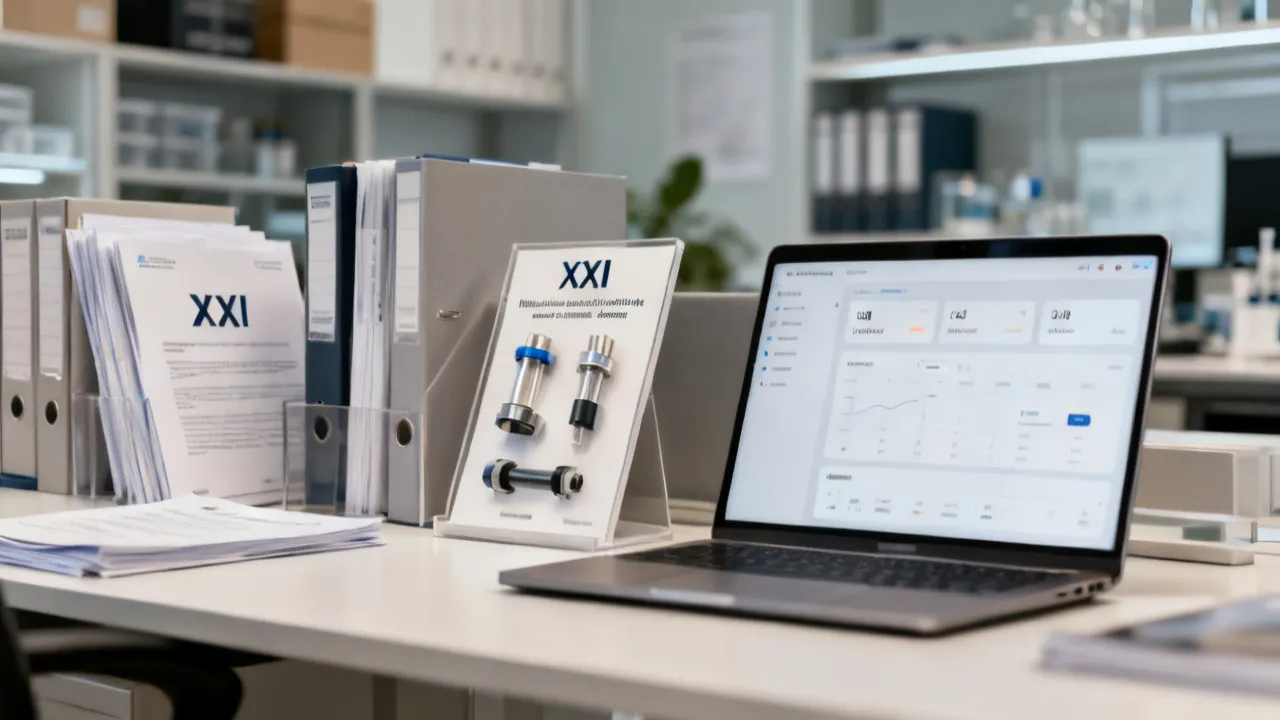
XXI procurement and supply planning help organizations align sourcing, pricing, and delivery decisions with measurable requirements. This guide explains the background behind XXI as a procurement concept, discusses how suppliers typically structure offers and lead times, and shows how to evaluate total cost, documentation readiness, and logistics risk—using an objective, industry-expert lens.

This guide explains how to evaluate supplier options tied to 77991104434 by focusing on documentation, traceability, pricing logic, and delivery conditions. Objectively, the keywords indicate a sourcing reference number and related supplier context. Readers will learn what to verify, how to compare offers, and which requirements reduce risk in procurement.

This guide explains how to evaluate “77991104434” for procurement and supplier sourcing decisions, focusing on practical requirements, traceability, and risk control. Objectively, the number can function as a reference used in commerce records, while sourcing depends on verified capability, documentation quality, and compliance checks.
