This guide explains how to evaluate procurement options tied to the code 692423217 53, including supplier considerations and a practical review of price, sourcing stability, and documentation quality. Background context covers why item codes matter in purchasing, how suppliers typically structure quotations, and what due diligence helps reduce operational risk in “nearby” supply chains.

When you encounter 692423217 53 in procurement records, treat it as a controlled identifier that must be validated before you compare any supplier offers. The very critical step is to confirm that the code maps to the correct product or service scope—then compare pricing transparently, confirm supplier capability, and review documentation requirements. Even if two quotations appear to match the “same item,” differences in specifications, packaging, lead times, compliance standards, labeling, test requirements, or acceptance criteria can change total cost of ownership.
In practice, the first verification often happens in three places at once: (1) your internal catalog or ERP item master, (2) the supplier’s quotation line item structure, and (3) your receiving/quality acceptance rules. If 692423217 53 is already present in an ERP, confirm whether it is a direct SKU, a contract reference, a service scope code, or a mapping pointer that links to a more detailed technical specification in another document set.
Because code-based purchasing can easily break when mappings diverge, the fastest route to correct outcomes is to establish “single source of truth” behavior for the identifier. That means your purchasing team should define exactly which field(s) represent the authoritative meaning of 692423217 53—for example, a combination of item code, revision level, and documentation package. If the supplier’s quotation does not reference the same revision or if the supplier offers “equivalent” without written approval, your procurement control should treat the offer as non-aligned until it is verified.
Another frequent early failure is verifying only that the code text matches, while ignoring that the procurement system may store the code in multiple variants (e.g., with or without leading zeros, different spacing, alternate formatting, or a suffix indicating classification or version). Therefore, your first verification should include formatting normalization checks and cross-referencing against the system’s item conversion table. When teams skip this step, they often see “mismatched” receiving disputes later, even though everyone believed they were ordering the same thing.
In professional procurement workflows, item codes and reference numbers serve as the backbone of traceability. A code such as 692423217 53 typically helps purchasing teams coordinate across systems—ERP catalogs, warehouse SKUs, quality documents, and receiving inspections. Objective due diligence begins with validating that the code corresponds to the correct bill of materials, technical drawings, acceptance criteria, and documentation package.
Procurement is not only about selecting a supplier and issuing a purchase order—it is also about aligning internal expectations and external deliverables. In a mature operation, 692423217 53 is rarely “just an ID.” Instead, it often functions like a contract anchor: it tells everyone what version of the item is expected, what tests and documentation should accompany it, and how receiving should validate it.
Because the prompt includes additional keyword fragments, this article approaches them as procurement-relevant tokens rather than asserting unverified claims about their identity. The focus therefore remains on a robust evaluation approach: confirm scope, compare quotations on like-for-like terms, and ensure supplier accountability. Put differently, the evaluation method does not depend on guessing what 692423217 53 “means” externally; it depends on what your organization’s systems and acceptance processes define it to mean.
To operationalize this, teams commonly build a “code definition record” that includes: specification, revision, packaging configuration, labeling rules, document pack, and acceptance tests. If your organization does not currently have such a record, you can still create a lightweight version for the purchase cycle. That lightweight record can be used to force internal clarity before requests for quotation (RFQs) are sent.
It’s also useful to consider whether 692423217 53 is used differently across business units. For example, one department may treat the code as a hardware SKU, while another uses it as a service bundle reference. If these internal uses exist, you should reconcile them during the code verification step. Otherwise, you can end up purchasing a bundle that looks correct in the PO but fails during receiving because the downstream use case required different documentation, or because the service portion was missing.
Many procurement disputes start with the same problem: teams compare the visible line-item price, but ignore what’s wrapped around it. For 692423217 53, a strong expert approach is to break “price” into components:
From an operations standpoint, the “top” supplier is often the one that minimizes procurement friction and downstream risk—not merely the one with the lowest unit figure. You can treat this like a total cost of procurement model. Total cost includes direct costs (price, shipping, duties) and indirect costs (time spent validating documents, time spent resolving nonconformities, production downtime risk, and rework costs).
It is also important to examine the cost structure of the quote itself. Some suppliers may present a low unit cost because they exclude documentation work, shipping insurance, or specific labeling. If your receiving team expects a certificate or batch-level traceability that is not included, the “saved” unit price can be lost quickly through delays or compliance gaps.
A practical best practice is to build a side-by-side quote comparison sheet for 692423217 53 that includes not only unit price but also a checklist of what the supplier is explicitly committing to. This sheet can include: packaging configuration (e.g., whether items are individually boxed or bulk packed), documentation package (e.g., conformity statement, test results, traceability list), and whether any inspection is performed before shipment.
Additionally, procurement teams should verify quote validity periods. A quote might be valid for a short time, and if procurement approval cycles are longer, you may be forced into re-quote or price adjustments. That risk should be considered when comparing suppliers, especially if 692423217 53 relates to items with frequent market pricing changes, raw material volatility, or energy-cost sensitivity.
Another nuance involves currency and payment terms. Two suppliers might quote in different currencies or propose different payment schedules. A full evaluation should normalize currency and account for financing effects and possible discounts. For example, payment terms like net 30 versus net 90 can significantly affect cost when you calculate the cost of capital. Even in straightforward purchasing, differences in payment terms can outweigh small unit price differences.
Supplier credibility matters because code-based purchasing usually implies repeatability and traceability. If the supplier’s internal product mapping is inconsistent, you can lose alignment between ordered items and receiving verification. A practical supplier evaluation framework typically includes:
In many organizations, there is a difference between “supplier can deliver the item” and “supplier delivers the item in the same controlled way every time.” Controlled delivery means: the same specification is used, the same documentation package is supplied, labeling and traceability are consistent, and the supplier has a change control process that informs you if manufacturing conditions change.
Code-based procurement is vulnerable to supplier mapping errors. A supplier might quote 692423217 53 correctly in the PO acknowledgement, but during production they might switch to a different revision or substitute a component that still looks compatible from a superficial perspective. Your procurement control should therefore require the supplier to commit to revision-level compliance and to provide evidence for each shipment.
Supplier evaluation should also include contract capability for change management. A supplier that cannot respond to changes, or that does not provide clear documents during a deviation request, can create significant operational costs later. In the context of 692423217 53, the evaluation should ask: if the supplier identifies an issue, do they notify you early? Do they request approval before shipping deviations? Do they provide deviation reports and corrective action evidence when nonconformities occur?
Finally, evaluate the supplier’s ability to provide the documentation that receiving and quality teams need. The best supplier is not necessarily the one with the cheapest unit price; it is the one that reduces verification effort and prevents compliance issues. If the supplier has a strong document management process—e.g., they attach certificates with shipments, they label batches correctly, and they provide traceability lists in a consistent format—you can reduce cycle time for acceptance.
An expert procurement workflow typically requires at least these items before a purchase order is finalized for 692423217 53:
It helps to treat due diligence as a “gate” rather than an “informal review.” In a gate-based process, you define pass/fail criteria. For example, you can define that the PO cannot be issued unless: (1) the supplier acknowledges the exact scope of 692423217 53, (2) the supplier’s documentation requirements are listed in the PO, (3) the supplier has confirmed revision-level compliance, and (4) any allowed substitutions have defined approval steps.
Specification confirmation should not be superficial. If the item is a mechanical component, confirm materials, coatings, tolerances, and dimensional drawings. If it is an electrical component, confirm ratings, compliance test standards, and wiring or installation requirements. If it is a service, confirm deliverables, acceptance criteria, service level, and reporting format.
When your procurement teams issue RFQs, you should also ask for “structured quotations.” Structured quotations are those that require the supplier to fill in standardized fields. This reduces ambiguity and makes comparisons fair. For 692423217 53, structured quotes typically request: unit price, currency, shipping cost or incoterms mapping, delivery date, packaging type, and a list of included documentation.
Finally, include a clear procedure for discrepancies. Suppose the supplier delivers items that do not match 692423217 53 documentation or labeling. Your purchasing and quality systems should specify: how will receiving report the discrepancy, who investigates, what is the nonconformance disposition (return, rework, acceptance with concession), and how costs are handled.
Many procurement organizations focus so heavily on price that they underinvest in discrepancy procedures. That leads to unpredictable outcomes and delays because teams scramble during receiving instead of following a defined playbook.
The prompt requests replacing any explicit city or country mentions with “nearby.” Accordingly, this article treats regional sourcing as a variable rather than a guarantee. When purchasing code-linked items, “nearby” sourcing can help with:
Yet, the core principle remains: location should not substitute for traceability, acceptance criteria, and written terms. Even if a supplier is “nearby,” they can still deliver the wrong revision, provide incomplete documentation, or ship using packaging that does not meet your receiving requirements.
In “nearby” sourcing scenarios, teams sometimes benefit from shorter response times, but they should still ensure that supplier documentation readiness is verified. If the supplier typically provides certificates only after shipment, you may receive documents too late for acceptance. Therefore, do not assume responsiveness equals compliance. Instead, specify documentation timelines: when must documents be provided (before shipment, at dispatch, or with the shipment)?
Another consideration is transport method and packaging logistics. For example, “nearby” shipments could still experience environmental stress (humidity, temperature cycling) that might affect quality for certain products. If 692423217 53 relates to items sensitive to environmental conditions, your procurement requirements should specify packaging standards, protective measures, and labeling that includes handling instructions.
Finally, in evaluating “nearby” suppliers, consider how escalation works. If there is a nonconformance, does the supplier provide a responsible contact within hours, or only days? A location advantage may reduce time to reach someone, but the speed of resolution depends on process maturity, not geography alone.
For procurement codes such as 692423217 53, documentation is frequently the difference between smooth receiving and recurring issues. A strong documentation package typically includes:
To define “good,” it’s helpful to break documentation into three categories: (1) identity documentation (what the delivered items are), (2) evidence documentation (what tests or inspections were performed), and (3) contractual documentation (what remedies and obligations apply).
Identity documentation often includes: part number/revision confirmation, batch/lot numbers, and manufacturer information. Evidence documentation can include results of acceptance tests, compliance certificates, inspection reports, and calibration evidence (when testing equipment is relevant). Contractual documentation includes warranty terms, RMA procedures, and any service-level commitments for the deliverable tied to 692423217 53.
Traceability should be verifiable at receiving. If your receiving process requires scanning labels, then the supplier should label at the correct granularity: individual unit labels if needed, or batch labels if receiving is batch-based. A common failure is that suppliers provide traceability details in a document but not on the package or labels, which means receiving cannot verify traceability quickly.
Another frequent gap is document completeness. Some suppliers provide partial documents, leaving quality teams to request missing pages. That causes delays and increases the chance that teams either accept without full evidence (risk) or reject and return goods unnecessarily (cost). A good documentation package includes a “document list” that enumerates every required item in the packet.
Also check for consistency between documents and labels. For example, a certificate might reference one batch number while the label shows another. Even small mismatches undermine trust in the documentation and can cause acceptance to fail. Therefore, your procurement requirements should specify that documents must match labels exactly.
Finally, ensure the documentation uses a format your teams can manage. If you require electronic document delivery, specify the file format (e.g., PDF), naming convention (e.g., PO number + batch + date), and the delivery channel (e.g., email, portal upload, EDI transmission). Code-based procurement often fails when documentation exists but is difficult to locate or interpret during receiving.
From an industry expert perspective, code-based procurement is at its safest when risk is reduced at the quote-to-order stage. Key risk categories include:
Mitigation is straightforward in principle: insist on written confirmation, require traceability evidence, and use acceptance criteria that the receiving team can verify objectively. However, in real operations, risk mitigation requires specific procedural controls. For 692423217 53, these controls can include:
Specification drift is often subtle. A supplier might treat 692423217 53 as a category code and ship a “substantially similar” item. Your mitigation is to require strict compliance to the specification and to define what constitutes an acceptable equivalent. Equivalency should not be a vague “similarity”; it should be measurable against stated tolerances, materials, or certification requirements.
Labeling errors can be prevented by requiring suppliers to provide label artwork approval or to follow a standardized labeling template. If receiving uses barcode scanning, the supplier must ensure barcodes decode to the correct product identifiers and that they match the documents.
Unclear warranty coverage is often caused by “generic warranty language.” Your remedy is to require warranty terms that specify: warranty period, what defects are covered, how returns are handled, and who bears shipping costs for replacement/rework. For items tied to 692423217 53, you should also require RMA instructions in the documentation packet or included as a PO attachment.
Substitution without consent is mitigated through change control requirements. Require the supplier to request written approval for any substitutions, and require them to document the rationale and the impact on specification and compliance. If your organization uses a formal approval workflow, specify it in the PO.
Finally, a key risk is “documentation mismatch risk”—the risk that documents exist but do not correspond to what was shipped. Mitigation is to specify that documentation must be batch-specific and unit-specific where required, and to require the supplier to attach documents to each shipment rather than sending them in aggregated form.
Traceability and documentation are widely emphasized across supply chain and quality management practices. While this article avoids unverified numerical claims, it is grounded in established management thinking and widely adopted standards. For readers seeking high-level context, recognized resources include:
These frameworks do not replace your internal requirements, but they help explain why procurement teams prioritize evidence over assumption.
In particular, traceability matters because procurement decisions often occur upstream while quality consequences manifest downstream. A weak procurement evidence package creates uncertainty during receiving, during production, and sometimes during audits. When your organization can trace delivered items back to documentation and batch identifiers, you reduce the probability of prolonged investigations when something goes wrong.
Moreover, traceability supports not only quality acceptance but also accountability. If defects arise, you need to determine whether the supplier complied with the agreed specifications and whether documentation was delivered as required. Strong procurement documentation packages create the “audit trail” needed for responsible decision-making.
Procurement traceability is also increasingly important in regulated and customer-audited environments. Even if your internal procurement process is not directly regulated, your customers might require you to demonstrate compliance and traceability. That means the choices you make when ordering 692423217 53 could affect your ability to pass downstream audits.
Additionally, traceability and evidence practices align with operational resilience. When the supply chain experiences disruptions, companies often need to qualify alternate suppliers or variants. If you have a robust evidence approach to identify what changed—revision, materials, tests, certificates—you can manage transitions with less risk.
| Evaluation Dimension | What to Compare (for 692423217 53) | Typical Conditions/Requirements | Decision Impact |
|---|---|---|---|
| Item Mapping | Confirm the code corresponds to the correct scope/specification | Written confirmation of part/service mapping; consistent SKU-to-code record | Prevents receiving mismatch and downstream rework |
| Price Structure | Compare like-for-like: unit price + delivery + packaging + documentation inclusions | Quotations must specify fees, incoterms (or equivalents), and quote validity period | Avoids “hidden” cost differences |
| Lead Time Reliability | Assess promised delivery windows and communication plans | Delivery date/lead-time stated in writing; escalation channel defined | Reduces schedule risk and line stoppage exposure |
| Quality Evidence | Check conformity documents, test/inspection records, and traceability | Certificates and batch/lot identifiers provided with shipment (where applicable) | Strengthens acceptance outcomes and reduces disputes |
| Substitution Control | Verify whether equivalents are allowed and under what approval rules | Supplier must request approval before changes; documented change-control process | Prevents unauthorized substitutions that break compatibility |
| Warranty & Remedy | Understand defect handling, replacement/repair timelines, and responsibilities | Warranty terms in writing; clear RMA/return procedure | Controls after-sales operational cost |
| “Nearby” Logistics Fit | Use proximity to improve responsiveness, not as a substitute for compliance | Pickup/delivery process defined; documentation package aligned with local receiving workflow | May improve reaction speed; still requires objective matching |
Procurement teams often underestimate how strongly reference numbers influence downstream operations. If 692423217 53 is treated as a mere administrative label, the organization risks “soft failures”—shipments that arrive, but are not technically usable, not traceable, or not compliant.
In contrast, expert-led procurement practices treat these identifiers as contracts in miniature. They anchor specifications, documentation, and acceptance criteria. When you compare supplier options, the very reliable path is to standardize the evaluation so each supplier answers the same questions in a consistent format.
Procurement professionals also recognize a subtle asymmetry: suppliers often know the difference between compliant and noncompliant deliverables, while buyers may not be able to detect noncompliance quickly at receiving. Therefore, the procurement process must shift the detection burden upstream—through verified documentation, traceability requirements, and objective acceptance criteria. That reduces the chance that noncompliance is discovered late, when replacement is more expensive.
Another expert insight is to distinguish “price competition” from “risk competition.” Suppliers may compete on price by reducing their compliance overhead. Your goal is to prevent this by requiring evidence-driven deliverables. For 692423217 53, that means requiring the supplier to include the right documentation and to commit to labeling and traceability that your receiving team can verify.
Finally, consider that suppliers do not quote in a vacuum. They price based on how they manufacture, test, label, and package. That means an apparently small difference in price can reflect real differences in documentation rigor, inspection effort, and risk allocation. Your job is not to “guess” why prices differ, but to require clarity and to ensure the quotation aligns with what your organization expects to receive and validate.
From a governance standpoint, you can implement a “minimum compliance package” requirement. For any PO referencing 692423217 53, the minimum compliance package could include: revision-level specification confirmation, batch/lot traceability evidence, inspection/test records aligned to your requirements, and warranty terms. If a supplier cannot provide those items, you treat the offer as not comparable—even if the price looks attractive.
Also pay attention to the supplier’s procurement responsiveness. If they respond quickly but cannot provide adequate documentation, the organization should treat speed as a secondary factor. If they can provide excellent documentation but quote lead times that threaten operations, you may need to weigh trade-offs. A good procurement decision balances compliance certainty, schedule certainty, and cost certainty.
It can help to structure supplier communication around a controlled Q&A. When 692423217 53 is involved, ask the same clarifying questions to all suppliers: “Which revision are you quoting?” “Will you provide certificates for each shipment?” “How will you label traceability identifiers?” “What is your policy on substitutions?” When suppliers respond consistently, your evaluation becomes more accurate and disputes become less likely.
In addition, expert procurement practices often include a “document readiness check” before shipment. That means confirming that the supplier has prepared the document packet and that it matches the shipped batch. Even if the shipment is delayed, ensuring document readiness reduces the probability of acceptance delays due to missing certificates.
In many organizations, a code like 692423217 53 functions as an internal reference that links to a specific product/service scope, specification, and documentation set. The exact meaning depends on your catalog/ERP mapping. You should confirm the mapping in your system or request written clarification from suppliers.
Compare like-for-like: unit price plus any delivery, packaging, taxes, and included documentation/testing. Also compare quote validity, payment terms, and lead-time commitments. The lowest unit price can be misleading if documents, compliance evidence, or shipping are not included.
Not automatically. “Nearby” can help with responsiveness and coordination, but lead-time reliability depends on the supplier’s production and inventory position. Always confirm delivery windows and escalation procedures in writing.
Typically you should request conformity or compliance evidence (where applicable), traceability details (batch/lot/unit identifiers), inspection/test records aligned to your acceptance criteria, and labeling/packaging instructions. Your exact requirements should match your internal quality management system and sector needs.
Require a documented request for substitution and insist on approval before shipment. Ensure the supplier explains how the substitute affects specification, compatibility, and documentation. Then verify acceptance criteria during receiving to prevent silent mismatches.
Use clear acceptance criteria and require suppliers to include the correct documentation packet with each shipment. Train receiving staff to verify code mapping, labels, and certificate presence, not just the delivered quantity.
Common references include ISO 9001 for quality management principles and ISO/IEC 17025 when testing competence matters. For risk-based diligence approaches, the OECD Due Diligence Guidance is often referenced. Always align external standards with your internal requirements.
In summary, procurement involving 692423217 53 should be treated as a controlled, evidence-driven process. The very effective approach is to verify code-to-spec mapping, compare supplier quotations on like-for-like terms, demand quality documentation and traceability, and ensure substitution and warranty conditions are explicit. When you incorporate these controls—whether sourcing is “nearby” or distributed—you increase the probability of correct receiving, lower operational friction, and more predictable lifecycle outcomes.
Note on verification: The article does not assert that the provided keyword fragments correspond to specific products or prices beyond the scope of structured procurement evaluation. For real purchasing decisions, confirm the item mapping and price terms directly with your internal catalog and supplier quotations.






This guide explains Xxx18 in a practical, industry-focused way, including what to check before sourcing and how to evaluate supplier fit. Background information covers what Xxx18 typically refers to in technical purchasing contexts, how buyers assess specifications, lead times, and documentation, and why disciplined qualification reduces project risk.

This guide explains how to interpret a product listing code like 28998869o15 and evaluate sourcing options responsibly. Objectively, such codes are often used to track SKUs, inventory batches, or catalog variants, while supplier information and pricing reflect logistics, compliance, and demand. The article outlines practical checks, comparison conditions, and FAQs to support informed purchasing decisions.

This guide explains how to assess “692423217 53” and related item identifiers from supplier listings, focusing on pricing, sourcing reliability, and verification steps. Background context covers how identifier-based procurement works, why documentation matters, and what buyers should evaluate before ordering from any supplier. The goal is practical, objective decision support based on standard sourcing practices.

This guide explains how to interpret the product identifiers 692423217 and 53 in a purchasing context, and how to evaluate supplier capability, pricing, and documentation quality before ordering. Objectively, such numeric codes typically support traceability, catalog matching, and inventory systems. You’ll also find practical sourcing conditions, comparison, and FAQs for more consistent procurement decisions.

This guide explains how to evaluate supplier pricing, terms, and sourcing reliability when comparing options tied to 692423217 53. It provides objective background on common procurement risks, how price can vary by service scope and fulfillment terms, and what documents typically matter—so decision-makers can compare like-for-like and reduce costly mismatches.

This guide explains how to evaluate 692423217 53 by focusing on sourcing reliability, price drivers, and compatibility checks. The number-style keyword typically represents a part identifier used in procurement and inventory systems. Objective background includes how suppliers validate specifications, manage lead times, and maintain traceability across lots.

This guide explains how “1993” functions as a reference point for today’s product, sourcing, and documentation decisions. Objectively, the term often appears in archival timelines, compliance narratives, and lifecycle discussions, shaping how buyers evaluate maturity, standards, and risk over time. You’ll learn how to interpret legacy signals without overclaiming performance.
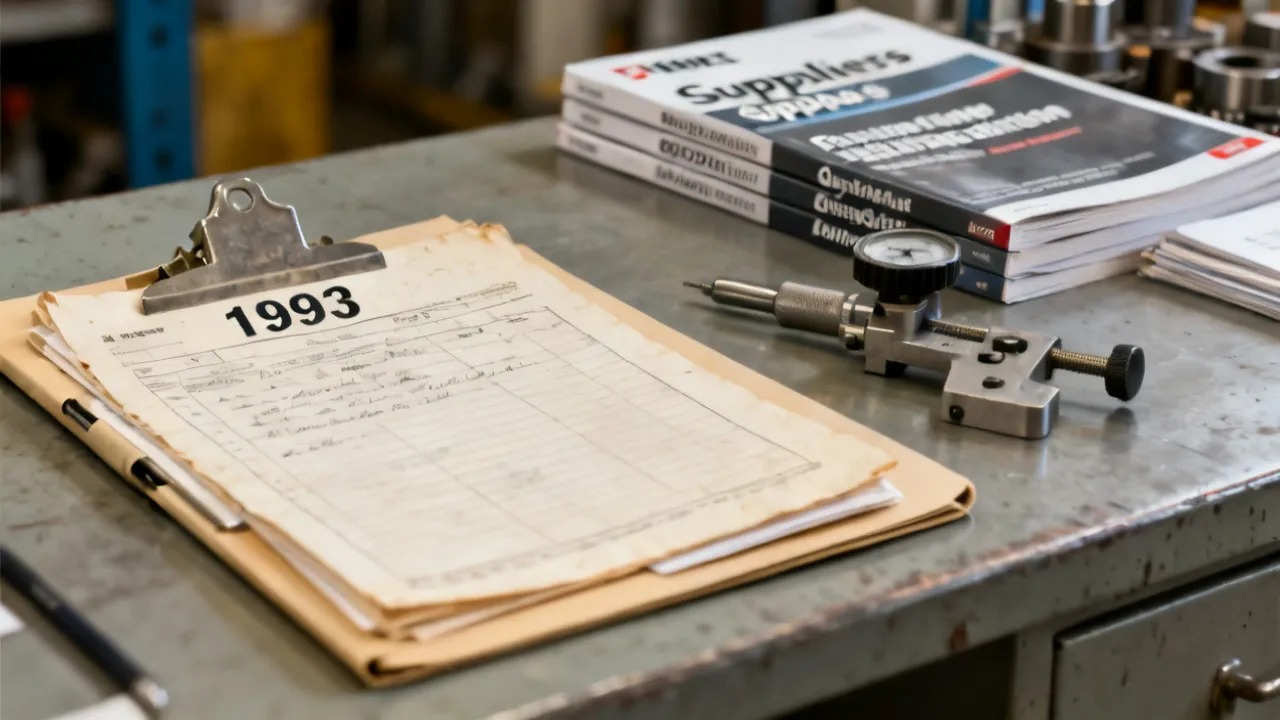
This guide explains how 1993-era standards shaped supplier decision-making and quality expectations. It provides objective context on why “1993” remains a reference point in procurement reviews, how supplier capability and document traceability influence outcomes, and which due-diligence checks are typically applied before sourcing or auditing. The focus stays practical and evidence-oriented, avoiding unverified claims.
