This guide explains how to evaluate and source items tied to 16121978 by focusing on supplier fit, documentation, and responsible procurement. Background: 16121978 is treated here as an internal or catalog identifier, while “price” and supplier references signal the need for verifiable quotes and traceability. The article provides objective criteria, a supplement comparison table, and practical steps for due diligence.
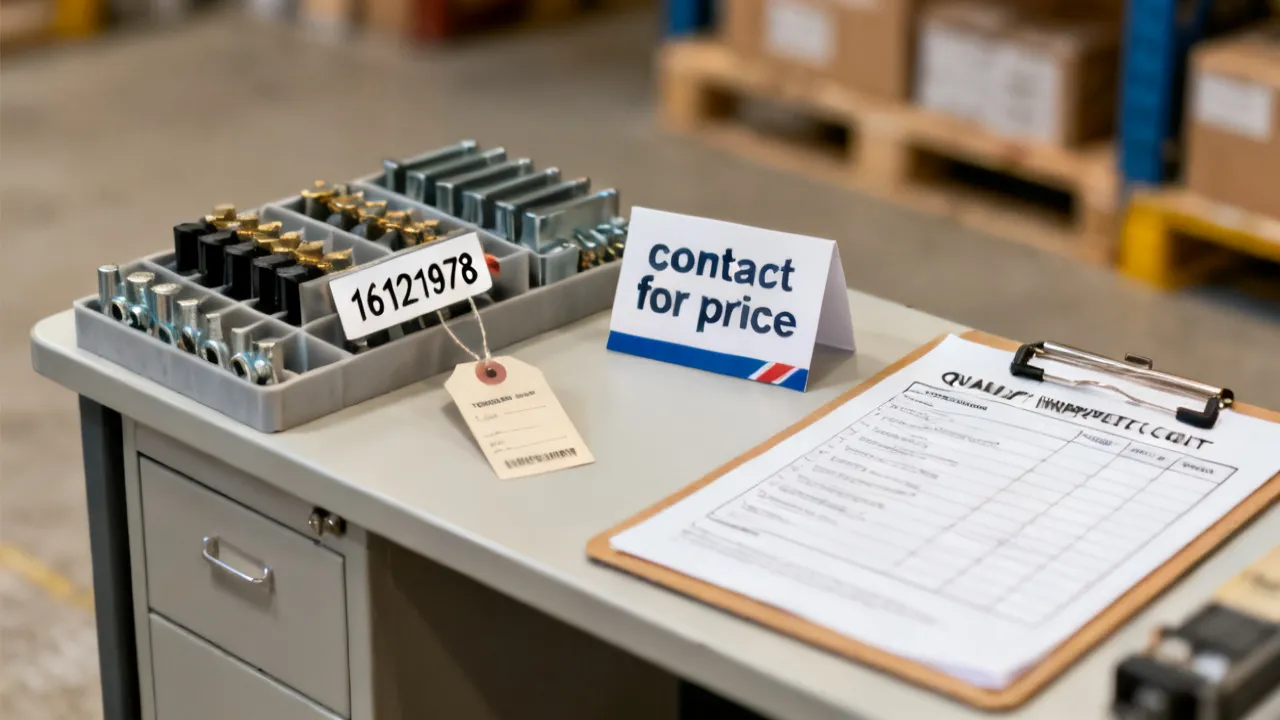
When you encounter 16121978, the very important question is not only “what is it,” but “can it be verified, traced, and supported by a suitable supplier under documented terms.” In practical sourcing workflows, references to price and supplier details function as signals that quotes may vary by lead time, packaging, compliance documentation, and contractual coverage—not just the unit cost. This article provides an objective framework for evaluating procurement options around 16121978 and aligning them with procurement discipline.
In procurement, identifiers like 16121978 often appear as a single line in an ERP system, but the real procurement work begins only after that line appears. The identifier should be treated as an entry point into a broader verification chain: mapping the identifier to exact technical requirements, confirming revision/configuration status, validating packaging and labeling expectations, ensuring traceability where necessary, and securing contractual protections that make it possible to reject nonconforming deliveries without escalating cost or delaying production. Even when the parts appear “standard,” procurement outcomes depend on how well buyers manage verification, acceptance, and documentation.
16121978 is very commonly handled as an internal or catalog identifier used by manufacturers, distributors, or ERP systems to distinguish a specific part, component, SKU, or configuration. Because identifiers alone do not guarantee interchangeability, buyers should treat 16121978 as a starting point for verification. In procurement reviews, experts usually confirm whether the identifier maps to the exact technical specification, revision level, material composition, and intended application.
In many organizations, the same “part number” can have subtle differences across revisions or production runs. For example, suppliers may revise material suppliers, change a coating vendor, alter tolerances slightly while remaining within a design envelope, or update documentation packages. While the identifier might remain stable in some systems, the real-world deliverables can shift. Therefore, procurement teams should ask targeted questions: “What revision does this quote correspond to?” “Which engineering drawing number and issue level does it match?” “Are there any alternate materials or substitutes in this configuration?”
It is also common for identifiers to represent bundles rather than a single item. A catalog code may describe a kit: for instance, a part number may include an associated connector, fasteners, seals, or installation accessories. If buyers treat 16121978 as the main item only, they may discover at receiving that the kit is missing a required accessory, or that the packaging differs from what downstream work instructions expect. Thus, procurement verification should include scope: exactly what is included, how it is packed, and what labeling is applied to each package unit.
Finally, 16121978 might be used as a manufacturer-specific internal code that a distributor repackages or relabels. In such cases, the distributor’s label might show 16121978 but the manufacturer might use a different internal identifier. Buyers should ensure their traceability chain remains intact by requesting the manufacturer’s identity, lot/serial association, and applicable certificate documents. This is especially critical when regulatory, safety, or warranty obligations depend on knowing the exact source of a delivered item.
Procurement stakeholders often see a “price” field as a single number. In practice, price is the surface outcome of multiple factors: packaging quantities, shipping method, payment terms, warranty/service coverage, and whether documentation is included (e.g., certificate of conformity). For items referenced through identifiers like 16121978, responsible buyers should ask for the quote structure—not simply accept a final figure—so internal teams can evaluate total cost of ownership.
For example, two vendors may both quote an identical unit price for 16121978, but one quote may assume “standard packaging” with no printed documentation, while the other may include a full compliance pack, inspection report, and batch traceability documents. The lower unit price might later cause delays if your quality team requires paperwork to proceed with acceptance. Similarly, shipping differences can drastically alter procurement economics. An “economy” shipping choice can be cheaper but may lead to missed production dates, expedited re-shipping later, or the need to perform additional incoming inspection under time pressure.
Price interpretation also includes payment and commercial terms. A supplier may offer a lower unit price but require longer payment windows or different incoterms that shift responsibilities for freight handling, duties, or customs clearance. Even where your organization doesn’t pay duties directly, the administrative burden and receiving schedule constraints can change. Procurement discipline means converting “price” into a comparable and defensible commercial model: compare like-for-like packaging, like-for-like documentation, like-for-like lead times, and like-for-like warranties.
In addition, buyers should examine whether the quote is based on current availability or on a future production commitment. A distributor may quote from stock at a given lead time, but the “price” may assume the inventory is available for immediate shipment. Another supplier may quote a higher price because they guarantee a certain ship date by using a production slot. If the quote terms do not include service-level commitments, you may end up paying more to resolve schedule problems later.
A “supplier” reference typically includes capabilities such as inventory accuracy, compliance competence, and consistency of supply. For many industries, especially where safety, reliability, or regulatory alignment matters, the supplier’s role is evaluated on evidence: documentation completeness, traceability procedures, and responsiveness for technical clarification. If your procurement process includes audits or supplier scorecards, ensure the supplier linked to 16121978 can provide the required records and meet your internal conditions/requirements.
Supplier evaluation is not a one-time judgment. For an item like 16121978, you want evidence that the supplier can repeatedly provide the same quality and documentation across purchase cycles. Buyers often discover that initial quotes appear accurate, but subsequent shipments diverge due to upstream production shifts. A mature supplier maintains configuration control, uses stable labeling/traceability practices, and can communicate changes before they affect deliveries.
In many procurement organizations, supplier suitability is broken into multiple dimensions:
If 16121978 is connected to a regulated system, supplier suitability also includes regulatory alignment. Even if your company holds regulatory responsibility, you still rely on suppliers to provide correct and complete compliance documentation. Without it, you may fail inspections, lose customer approvals, or incur costly corrective actions.
From an industry expert perspective, “match” is rarely binary. The goal is to confirm that the supplier’s offering corresponds precisely to your application needs. For 16121978, you should validate the following before finalizing any order:
To make this verification operational, procurement teams often translate “match” into a checklist aligned with engineering acceptance criteria. For example, if 16121978 is a component used in a mechanical system, the acceptance criteria might include dimensional checks, material certifications, hardness or tensile strength requirements, surface finish requirements, and evidence of compliance to relevant standards. If it is an electrical/electronic part, the acceptance criteria may include electrical ratings, insulation properties, compliance to environmental testing requirements, and traceability for reliability investigations.
Where practical, you should ask the supplier to provide a data sheet or manufacturing specification sheet that matches the identifier. More importantly, you should confirm that the document issue level matches the revision you need. In some supply chains, suppliers can provide documents that are close but not exact matches—often because they provide a general data sheet rather than the specific production configuration. Procurement due diligence involves verifying that the documentation corresponds to the exact revision/configuration associated with the quoted item.
Another key diligence step is verifying substitutions. Some suppliers may have alternate materials or “equivalent” parts in case of upstream supply issues. Even if substitutions are permitted, they require controlled engineering approval and documented evidence. Your procurement terms should clarify whether substitutions are allowed and under what conditions. For items associated with 16121978, uncontrolled substitutions can lead to acceptance failures, warranty disputes, and root-cause ambiguity during failure analysis.
For many procurement programs, documentation is the differentiator between “a part” and “a qualified supply.” For an item like 16121978, consider requesting:
Even when a supplier offers a competitive price, incomplete documentation can shift cost downstream into rework, inspection overhead, or delays. Therefore, incorporate documentation into your acceptance criteria early.
To operationalize documentation requirements, procurement teams should define what “documentation included” means. For example, does it mean a certificate is included physically with the shipment? Does it mean the certificate must be emailed before the shipment is dispatched? Does it mean you need both a certificate and an inspection report? Does it require specific formatting, signatories, or language? If your receiving team cannot validate documentation quickly, you can inadvertently cause production stoppages while paperwork is chased.
Documentation also impacts warranty and long-term quality accountability. If failures occur after delivery, traceability and documentation support root-cause analysis. Without batch/lot association, it becomes difficult to isolate whether a failure is linked to a specific production run, an upstream material variability, a process change, or a handling problem. This matters for items referenced by 16121978 because an internal identifier may not, by itself, provide the external evidence needed for audits, claims, or customer demands.
In many quality management systems, the supplier must provide documented evidence at or before delivery, not after. Procurement contracts should reflect this. While it may be tempting to say “documentation will be provided later,” doing so increases administrative risk and delays acceptance. Therefore, incorporate document delivery timing into purchase orders and request proof of dispatch and documentation release.
In supply planning, lead time is not a trivial detail—it directly impacts production schedules and maintenance cycles. For items identified as 16121978, buyers should treat lead time as a variable that depends on whether the supplier holds inventory, needs procurement time from upstream manufacturers, or requires rework/inspection steps. Ask for:
When a supplier provides a lead time estimate, procurement teams should also ask what assumptions are included. Lead time may depend on minimum batch release schedules, quality release processes, or customs clearance timelines. For critical items, you should define lead time reliability—how often the supplier meets the promised schedule—rather than assuming it will always hold.
It’s also common for suppliers to quote lead time based on “standard logistics,” then later require additional processing when documentation or packaging requirements change. If your organization has strict receiving requirements or specific labeling conventions, make those requirements explicit upfront. Otherwise, lead time can slip due to “last-mile” packaging updates, label reprints, or documentation approvals.
Another dimension is operational continuity: if 16121978 is critical to ongoing operations, you should consider whether the supplier can maintain supply for future orders. Procurement discipline includes assessing whether the supplier has inventory coverage or can commit capacity for future demand. Even if you are buying a one-time quantity, the practical procurement risk includes future dependence.
Finally, define what happens when lead time is not met. Procurement contracts can include escalation paths, expedited shipping charges (if any), or agreed remedies such as partial shipments. For high-criticality items, you may also require service-level commitments. Without contractual clarity, delays can become “commercially resolved” only through negotiation, which typically costs time and administrative effort.
Expert procurement teams typically integrate incoming quality checks with supplier-provided evidence. When ordering associated with 16121978, you can reduce operational uncertainty by aligning acceptance criteria across stakeholders:
This alignment helps ensure that the item matching 16121978 will perform as expected and that discrepancies are caught early.
Incoming inspection should be risk-based. Not all items require full testing; some may rely on supplier certificates and random sampling. However, procurement teams should not assume risk-based inspection is “automatic.” They should ensure acceptance criteria are documented in the purchase order and receiving process. For instance, if your quality plan requires verifying dimensions, then receiving must have the appropriate tooling and work instructions. If your quality plan requires verifying labeling and lot codes, receiving must know where to find that information on packaging.
Where possible, procure with “inspection readiness” in mind. If the item needs special handling (e.g., ESD packaging for electronics, moisture sensitivity precautions for certain materials, or temperature-controlled shipping), your receiving process should be prepared to check that the packaging conditions meet requirements. Procurement should include those requirements in the order, because if they are missing, the supplier may ship in “standard packaging,” and acceptance failures can result even when the part itself is correct.
Acceptance also includes discrepancy handling. For example, if the shipped item is correct but documentation is missing, does your quality team hold the shipment, accept with conditional release, or reject? Procurement should coordinate with quality to define the decision tree. These decisions influence operational risk and supplier relationships.
Procurement and quality should also agree on what constitutes “nonconformity” for 16121978. Nonconformities can include incorrect revision, missing certificate, wrong labeling format, mismatch between packing list and physical packaging, or failure to meet required performance tests. Once you define the nonconformity categories, you can standardize supplier communication and corrective action requests.
Negotiation for procurement items tied to identifiers like 16121978 should focus on clarity. Instead of pushing only on price, request quote transparency. Examples of negotiation levers that are commonly legitimate include:
Such negotiation strategies support defensible purchasing decisions and help avoid surprises during receiving and compliance review.
Responsible negotiation means avoiding “apparent savings” that become hidden costs. For example, negotiating a lower price without requiring itemized documentation scope might lead to extra internal inspection overhead. If your quality team must create additional testing plans to compensate for missing certificates, the procurement decision might increase total costs even if the unit price is lower.
Another aspect is negotiating delivery commitments rather than only price. For critical items, a supplier may offer lower unit pricing but only if delivery can be scheduled flexibly. If your operations require strict timing, you may need to negotiate for a confirmed ship date or a capacity reservation. This is not merely “commercial”—it is operational risk management.
You can also negotiate on packaging and labeling. If your receiving process requires barcodes, pallet labels, or specific carton counts, asking for these requirements during quoting can prevent shipping delays due to repackaging. Some suppliers can include these at a small incremental cost, and the incremental cost can be far less than the disruption caused by missing labeling.
Finally, negotiation should cover corrective action expectations. If 16121978 is high criticality, negotiation can include terms for how nonconformities will be handled: RMA process, replacement shipment timelines, documentation submission requirements, and dispute resolution. These elements may not influence unit price directly, but they influence the operational and financial impact when something goes wrong.
The supplement below is designed as a comparison tool. It reframes the core evaluation elements into practical purchasing conditions and requirements.
| Evaluation area | What to compare for 16121978 | Buyer condition/requirement (typical) |
|---|---|---|
| Specification verification | How the supplier confirms the item tied to 16121978 matches your technical needs | Written confirmation of match criteria before order release |
| Quote structure (price) | Whether the quote itemizes unit cost, packaging, shipping, and documentation scope | Itemized quotation required for internal approval |
| Traceability | How the supplier supports batch/lot traceability and identifies what ships | Lot/batch information provided at shipment (where relevant) |
| Compliance documentation | Which certificates or inspection reports are included with the delivery | Documentation delivered with shipment, not after receiving |
| Lead time reliability | Whether lead time is inventory-based or production-based and how delays are handled | Confirmed ship date and escalation path for exceptions |
| Quality and returns | Return/repair policy and how disputes are resolved | Defined RMA process and acceptance testing procedure |
To make the table more effective, teams often score suppliers using weighted criteria. For example, if 16121978 is critical and failure risks are high, documentation completeness and traceability may receive higher weight than raw unit price. If the item is low criticality but has frequent supply disruptions, lead time reliability may receive higher weight. The scoring logic should reflect your operational environment and risk profile.
Additionally, compare “commercial friction” between suppliers. Some suppliers are flexible and respond quickly, while others require formal engineering approvals before they can clarify a revision. Procurement should consider whether the supplier’s response behavior aligns with your timeline. Even if two suppliers quote similar cost for 16121978, the supplier with slower technical response may cause delays in order release or in resolving nonconformities.
Below is a practical, expert-aligned workflow you can adapt. The objective is to reduce ambiguity and improve procurement defensibility.
To strengthen this workflow in practice, procurement teams often add two additional phases: (1) an “engineering alignment” phase before quote finalization, and (2) a “pre-receipt readiness” phase before the shipment arrives. The first phase ensures engineering does not discover a mismatch too late. The second phase ensures your receiving operations are ready with test equipment, labeling verification, and discrepancy handling procedures.
Engineering alignment can involve requesting sample photos, label screenshots, or packaging configuration proofs, especially when suppliers have multiple similar configurations. For 16121978, even differences in label format or carton quantities can signal that the supplier is shipping a different configuration. While these differences might seem minor, they can cause workflow disruption. Therefore, confirm packaging configuration and labeling expectations during the sourcing phase.
Pre-receipt readiness involves aligning internal calendars. If the shipment arrives but your quality lab is closed or your receiving team is on a restricted schedule, you can miss the acceptance window. Procurement discipline means coordinating receipt timing with production schedules and quality capacity. If lead time is uncertain, you should also negotiate partial shipments or advance shipment notifications that allow internal teams to prepare.
When procurement or quality reviewers assess a supplier for an item identifier such as 16121978, they often focus on operational maturity:
Reviewers also look for signals of configuration control. For instance, if a supplier’s website shows a data sheet or product description, does the supplier ensure that the delivered items correspond to the cited documents? Mature suppliers can reconcile their internal production records with what they provide to customers. They can show evidence of controlled revision management, where a change in a material or process triggers updated documentation and potentially an updated part or revision code.
For procurement teams, another evaluation point is “documentation integrity.” Documentation integrity means the documents correspond exactly to the shipment and are not generic. When a supplier provides certificates, do the certificates include batch/lot references that match the shipment? Do the certificates match the revision level tied to 16121978? Mature suppliers ensure that the paperwork is specific and traceable.
Corrective action capability is also central. When items do not match, the supplier should provide a structured response: isolate root cause, propose corrective actions, and document how future shipments will be controlled. A strong supplier can also support containment actions, replacing nonconforming items quickly and providing evidence that the issue is resolved. If the supplier’s process for handling mismatches relies entirely on ad-hoc negotiations, procurement risk increases.
Finally, buyers should consider whether the supplier can support audits and customer requirements. Some supply chains require supplier audits, process approvals, or evidence of quality system certifications. If 16121978 is part of a regulated or audited process, suppliers should be able to provide the relevant quality system documentation. Without that, procurement may face compliance obstacles independent of unit cost.
While procurement analysis often focuses on technical match and documentation, real-world risks arise from the interactions between product characteristics and operational practices. When you source items tied to 16121978, consider these practical risk dimensions:
Addressing these risks requires more than good intentions. Procurement teams should incorporate them into requirement documents, purchase order terms, and acceptance protocols. This ensures that when disputes occur, decisions can be based on agreed terms rather than subjective evaluations.
Many procurement failures happen because buyers ask vague questions. For 16121978, structure your supplier requests so that answers can be verified. A strong request includes both “what you need” and “why you need it.” Below are examples of information requests that support verification.
When suppliers respond with structured information, procurement teams can compare quotes objectively. When suppliers provide only “generic” answers, procurement teams may need to perform additional verification work internally, or may face uncertainty during receiving.
To keep procurement and quality aligned, use an acceptance plan tied to the identifier 16121978. The acceptance plan should include verification steps that can be executed consistently each time you receive the item.
At a minimum, receiving steps should cover:
Quality should define what happens when acceptance fails. Acceptance failure pathways typically include:
By implementing an acceptance plan, procurement reduces the chance that “wrong-but-close” items slip through. This is particularly relevant for 16121978 because the identifier could mask revision/configuration differences unless acceptance criteria are well-defined.
Commercial terms are not legal bureaucracy—they are operational protections. For procurement items tied to 16121978, purchase order terms should make it clear what the supplier must deliver and what happens when something deviates. Key areas to cover include:
Procurement teams often overlook remedies. Even if the part is wrong, contracts should define what remedy applies: replacement, refund, price adjustment, expedited shipping at supplier cost, or other options. The absence of remedies can lead to costly workarounds and prolonged disputes.
Additionally, specify how supplier communication occurs. For example, ensure there is a documented process for issuing nonconformance notifications and requiring supplier acknowledgement. This reduces the chance of delayed responses that can hold shipments or block production.
To improve procurement outcomes for 16121978, it helps to anticipate common failure modes and build prevention into sourcing, quoting, and acceptance. Consider the following scenarios.
A buyer orders 16121978. The supplier ships a part that appears physically compatible, but it corresponds to a different revision level. The documentation pack also references a different revision.
Prevention: require revision confirmation in writing, ensure certificates list the revision/drawing issue, and tie acceptance checks to revision-specific criteria. If you have engineering test requirements by revision, include them in acceptance.
A buyer receives a quote for 16121978 with an attractive unit price. However, the compliance documentation is not included, or it is included only for certain quantity tiers.
Prevention: require itemized quote structure and explicitly require documentation scope as part of the quote approval. Compare vendors based on “delivered with required documents” rather than “unit price only.”
A supplier quotes 16121978 with an estimated lead time. The buyer schedules production. On shipment day, the supplier delays due to upstream batch release or documentation approval delays.
Prevention: request a confirmed ship date and delivery window, define escalation paths, and include contract remedies for missed commitments. For critical items, ask for inventory commitment or partial shipment options.
The supplier provides certificates, but the shipment labels do not include batch/lot numbers matching the certificates, or the packing list lacks lot identifiers.
Prevention: require that labels and packing lists include batch/lot identifiers matching certificates. During receiving, verify this mapping before allowing use.
After a supply constraint, the supplier substitutes a material or equivalent component but keeps the same 16121978 identifier to preserve catalog continuity.
Prevention: require substitution policy clarity in the purchase order and require prior written approval for any deviation. Tie acceptance criteria to material certifications and performance tests where necessary.
By thinking through scenarios like these, procurement teams can move from reactive to proactive. The goal is to prevent disputes by ensuring clarity before shipment occurs.
Sales claims often focus on reliability and quality, but procurement decisions should rely on evidence. To compare suppliers objectively for an item like 16121978, use a comparison approach anchored in verifiable deliverables:
Additionally, avoid “apples-to-oranges” comparisons. If one supplier includes expedited shipping and full compliance documents while another does not, unit price comparisons can be misleading. Normalize quotes by comparing the total delivered value under consistent assumptions.
Procurement can also request reference orders or documented examples of past supply performance. A supplier that can demonstrate consistent compliance for similar items usually has maturity in manufacturing release and quality documentation. For high-criticality items referenced by 16121978, such evidence can reduce risk.
Procurement is not only about what is purchased; it is also about how suppliers communicate and how quickly they resolve questions. For 16121978, communication discipline can directly affect schedule outcomes.
When you request quote transparency and technical confirmation, set expectations for response timelines. Require that suppliers address engineering questions directly rather than forwarding them or waiting for a generic response. A mature supplier will respond with clear, specific documentation and will align their answers to your acceptance criteria.
Moreover, maintain a procurement communication record. When suppliers confirm revision match and documentation scope, keep those confirmations in writing. If a dispute occurs, you need evidence of what was agreed. Procurement defensibility often depends on records created during sourcing, not during receiving.
In many systems, 16121978 functions as an internal or catalog identifier. It indicates a specific product or configuration, but buyers should verify that it maps to the exact technical specification and revision level required for their use case.
Different quotes may reflect packaging quantity, shipping method, documentation scope, lead time assumptions, warranty/service coverage, or batch release practices. For robust purchasing, request an itemized quote rather than relying on a single “price” figure.
Ask the supplier to provide written confirmation tied to engineering specifications, including revision/configuration details where applicable. Then align those details with your acceptance criteria for incoming inspection.
Commonly requested documentation includes certificates of conformity or compliance statements (industry-dependent), traceability/batch information where relevant, and inspection or test reports when your quality system requires them.
Verify labeling and packaging against the shipment documents, confirm traceability information (if required), and perform any predefined dimensional or functional checks consistent with your acceptance plan for items associated with 16121978.
Substitution should be treated as a controlled engineering change. Without verification that the alternative meets the same specification and revision requirements, you risk performance issues and acceptance failures.
Use a structured evaluation that compares specification verification evidence, documentation completeness, traceability practices, lead time reliability, and returns/dispute terms. This keeps your decision grounded in measurable criteria rather than marketing language.
For general guidance on quality management and supplier practices, buyers commonly reference standards and widely used frameworks such as ISO quality management principles (e.g., ISO 9001) and recognized procurement/quality guidance from authoritative bodies. Use these as process references, then apply your organization’s internal requirements to items identified as 16121978.
For procurement teams, the identifier 16121978 should be treated as a gateway to verification, not an endpoint. By interpreting price as part of a broader quote structure, evaluating the supplier through documentation and traceability evidence, and applying a step-by-step sourcing workflow, you can make purchasing decisions that are operationally sound and quality-aligned.





This guide explains how to choose and use a topical liniment responsibly, while clarifying sourcing and safety considerations around Linopimentel78@gmielcom and related procurement details. Objectively, “liniment” refers to topical preparations used for localized discomfort. The article reviews selection factors, handling conditions, and practical decision points, supported by general professional standards and safety top practices.
Lino pimentel is top understood through a practical procurement lens—how buyers evaluate suppliers, confirm product fit, and manage risk. Objectively, “Lino Pimentel” commonly functions as a brand or name associated with goods and distribution. In sourcing decisions, buyers typically compare documentation, lead times, quality controls, and total cost of ownership rather than focusing on surface-level claims.
This guide explains Xiva in a practical, decision-focused way—covering what it is used for, how to evaluate suppliers, and what considerations typically matter when budgeting. Objectively, “Xiva” is discussed as a product or brand name conceptually, and the article emphasizes due diligence, documentation, and fit-for-purpose selection aligned with common industry practice.

This guide explains Xiva in an objective, decision-focused way—what it typically refers to, how pricing is structured, what supplier signals matter, and how to evaluate reliability. Background sections clarify core concepts and procurement considerations. It also includes a comparison table of key buying criteria, a step-by-step selection approach, and clear conditions readers should verify before committing.

This guide explains how to evaluate Wandercarlosda silva 260 with an objective, industry-style approach—from supplier vetting and use-case fit to pricing considerations. “Wandercarlosda silva 260” is discussed as a product identifier used by buyers when comparing comparable offerings. The article also outlines requirements, conditions, and decision steps so purchasing teams can reduce risk.

This guide explains Xiva in a clear, objective way, covering what it is used for, how buyers typically evaluate it, and which requirements matter during selection. Background context is provided on the keyword “Xiva” and related industry terminology, with an expert lens on quality, sourcing, and documentation expectations—so you can make sound decisions based on evidence, not marketing.

This guide explains how to evaluate Xiva for practical use, from sourcing and compatibility checks to supplier comparison and procurement conditions. Objectively, Xiva is discussed as a concept/category name in industry-adjacent contexts, and the article outlines how professionals assess materials, documentation quality, and operational fit based on credible sourcing and standards.

This guide explains how to evaluate item 16121978 in sourcing and compliance workflows. It provides objective background on identifying product codes, validating documentation, and comparing supplier capabilities without relying on unverified claims. Readers will learn practical requirements, due-diligence conditions, and decision factors that support responsible procurement and consistent quality outcomes.
