This guide helps you evaluate product code 28998869o15 and related supply options with a practical, objective approach. Background context explains what supplier sourcing codes typically represent, how pricing and lead times are assessed, and why documentation matters in procurement decisions—without relying on unverifiable claims.

If you’re investigating product code 28998869o15, the most important step is to validate identity, specifications, and documentation before you compare supplier offers on price and availability. In many procurement environments, the “code” functions as a traceability handle—linking a catalog item to a particular configuration, manufacturing batch policy, revision status, or specification set—so you should treat it as a key to verify, not as proof by itself.
In parallel, you should assess suppliers using consistent criteria: technical match (materials, tolerances, compatibility, performance parameters), process controls (quality assurance, change management, nonconformance handling), commercial terms (incoterms, warranty/returns, documentation scope), and logistics reliability (lead time variability, packaging integrity, fulfillment capability). Only after those checks should you compare pricing across quotes.
Another executive-level takeaway: build a “quote equivalency discipline.” That means you require each vendor quote to be structured so you can verify apples-to-apples comparability (same datasheet revision, same packaging class, same documentation bundle, same shipping terms, and same expected lead-time pathway). Without that, the lowest unit price often correlates with the highest risk of receiving the wrong variant, missing compliance paperwork, or facing delays due to production scheduling.
Codes like 28998869o15 are commonly used in industry to reduce ambiguity: they help procurement, engineering, and warehouse teams map an item request to an exact SKU/configuration. When teams ignore that structure—or assume the code guarantees equivalence—they often end up with mismatched variants—especially when products have multiple configurations, regional revisions, or documentation differences across sales channels.
Even if two listings appear similar, a small change (connector type, coating spec, material grade, dimensions, formulation, packaging class, compliance documentation, calibration state, or revision status) can affect performance, regulatory fit, or assembly compatibility. For that reason, a professional sourcing workflow treats codes as starting points for verification, then confirms specs through datasheets, test reports, certificates of conformity, internal engineering references, and the reference documentation used by the manufacturing process.
In addition, product codes often intersect with enterprise systems such as ERP item masters, warehouse scanning rules, and enterprise resource planning (MRP) planning logic. A “correct” code mapping at one point in your supply chain doesn’t necessarily remain correct at later steps if catalog data is updated incorrectly or if a vendor updates their part number scheme. Therefore, you need both upstream and downstream checks: confirm what the code maps to in vendor terms and confirm what it maps to in your receiving and QA terms.
Finally, in regulated or safety-critical settings, the product code may be used to demonstrate traceability requirements for audits and incident investigations. If your ability to prove that the received items correspond to the intended configuration is weak, the procurement decision can create downstream liabilities. This elevates the value of verifying revision-level documentation rather than relying on a general catalog description.
When you request quotes for an item associated with 28998869o15, price is only one dimension. A more decision-relevant evaluation focuses on total cost and risk. Total cost includes obvious components like shipping, duties (if applicable), and packaging, but it also includes “hidden” costs—rework, inspection failures, return shipping, delayed production schedules, and administrative time spent resolving disputes about what was actually supplied.
A robust evaluation should include the following areas:
From an industry expert’s perspective, supply codes are often embedded within broader systems—ERP catalog structure, manufacturer part numbering, distribution SKUs, compliance documentation identifiers, and even warehouse scanning workflows. That means your due diligence should test whether the supplier’s catalog mapping is accurate and current, and whether their catalog description corresponds to the exact configuration you need.
Consider the typical failure modes:
Professional buyers reduce these risks by requiring a spec confirmation checklist and matching it against the documentation submitted with the quote. They also formalize acceptance criteria in purchase orders so that the supplier is held accountable for what they claim they will deliver.
In many enterprises, the procurement function collaborates with engineering and quality to ensure that the decision is evidence-based. The procurement team can enforce documentation requirements (what must be provided), while engineering confirms technical compatibility, and quality confirms traceability and inspection readiness.
The provided keyword fragments include a prominent identifier, 28998869o15. In supplier research, such tokens are often used to cross-reference catalog items, internal procurement lists, or warehouse scanning systems. Even if the other fragments are not clearly interpretable as standard part identifiers, they still function as search anchors—useful for finding consistent listings across distributors or for locating vendor documentation that mentions the identifier directly.
Accordingly, you should treat any keyword you encounter during sourcing as a potential traceability pointer, then verify the underlying item attributes with an evidence-based workflow. For example, if your sourcing team finds 28998869o15 referenced in a distributor listing, you should confirm that the distributor’s manufacturer mapping corresponds to the same code and revision in the manufacturer’s own documentation. Distributor pages can become stale or can represent re-packaged items under different packaging.
In practice, you can integrate keyword fragments into your process by:
This approach reduces the chance that a code appears correct during ordering but becomes ambiguous during receiving and acceptance testing.
Because pricing can be influenced by MOQ (minimum order quantity), lead time commitments, packaging format, compliance documentation inclusion, and logistics lane options, it’s easy to compare numbers that don’t represent the same deliverable. A structured method helps you avoid “apples-to-oranges” comparisons—where one supplier quotes includes the required documentation bundle and stable lead time, while another quotes a lower unit price but excludes certifications, uses a different packaging class, or assumes substitution rights.
Suggested approach: When receiving price information tied to 28998869o15, request a quote breakdown that includes:
This lets you compute a comparable “landed” cost and a risk-adjusted value, rather than choosing the lowest unit price alone. Landed cost should also account for your internal cost of inspection and the potential cost of delays if items fail acceptance criteria.
When doing comparisons, you can also incorporate a “documentation readiness score.” For example: if Supplier A offers full traceability documentation and stable lead times, while Supplier B offers partial documentation and uncertain lead time, Supplier B’s lower unit price might still be more expensive once risk and schedule impacts are included.
If you are sourcing under an identifier like 28998869o15, evaluate suppliers through a documentation-first lens. Many sourcing issues arise because buyers rely on marketing pages rather than procurement-grade evidence and because they do not align vendor documentation with engineering and QA requirements.
Key diligence items include:
Due diligence also includes verifying that the supplier quote is consistent across attachments: quoted unit, quoted revision, quoted lead time pathway, and quoted documentation bundle should match word-for-word (or at least concept-for-concept) across the quote document, datasheet attachments, and any certificate templates.
Many organizations create a “minimum viable vendor packet” required before placing purchase orders. If Supplier A cannot provide that packet, even if pricing is attractive, you can limit yourself to pilot orders or defer procurement until the documentation is available.
Substitution can be acceptable in some procurement contexts, but it should never be handled casually when you are referencing 28998869o15. If a supplier proposes an equivalent, require explicit confirmation of form, fit, and function, plus compatibility evidence relevant to your application. Substitution is often the point where risk concentrates: the product might “work” at a basic level but fail under the precise conditions your application requires.
To manage this, define substitution boundaries:
Accept substitution only if: The supplier provides a written equivalency statement, updated datasheets for the substituted configuration, and evidence that performance/compliance requirements remain satisfied. If these are not available, treat substitution as a risk and request clarification before purchase. In many QA-controlled environments, you should also define whether substitution triggers a new engineering review or a requalification test plan.
Also, be cautious with “soft substitutions” where a supplier states “equivalent” but does not specify the equivalence basis. Without explicit evidence, “equivalent” is often marketing language, not procurement documentation. Your purchase order and QA acceptance criteria should block that ambiguity.
The keyword rules you provided instruct replacing any occurrence of {city} or {country} with “nearby.” No explicit city or country placeholder was provided in the keywords, so this guide uses general, broadly applicable sourcing language intended for audiences working in various regions. When you adapt quotes and logistics terms, reflect your local customs, import documentation norms, and standard procurement practices used in your supply chain.
Localization affects procurement in several concrete ways:
If your organization is operating across regions, ensure your “quote comparability rubric” includes localized checks: for example, whether the supplier can provide documents in your required format/language and whether they meet local import documentation requirements tied to the product’s classification.
Below is a supplement to help you compare supplier options for items associated with 28998869o15 using consistent criteria. This is designed to be used during quote review, not after a decision has already been made.
| Evaluation Area | What to Verify | What “Good” Looks Like | Supplier Requirements / Conditions |
|---|---|---|---|
| Item Identity | Exact mapping of 28998869o15 to a configuration | Same datasheet revision; clear SKU/config confirmation | Request written confirmation and the applicable datasheet revision |
| Technical Compatibility | Form/fit/function match for your application | Specs align with your engineering requirements | Provide spec sheets, tolerance details, and compatibility notes |
| Quality Evidence | Inspection and conformity documentation | Documents reference the specific batch/lot as applicable | Request certificates/inspection reports relevant to the order |
| Lead Time Reliability | Stock vs production lead time | Clear lead-time statement with realistic expectations | Ask for lead time range and fulfillment approach for delays |
| Commercial Terms | Returns, warranty, and defect handling | Defined coverage; clear process for claims | Obtain written terms before purchase authorization |
| Packaging & Handling | Packing method and damage prevention | Appropriate packaging for shipping conditions | Specify packaging requirements in the purchase order |
| Total Cost | Unit price plus logistics + documentation value | Comparable quote structure across vendors | Request an itemized quote breakdown (landed cost basis) |
To convert the table into a reliable workflow, follow a defined sequence:
One practical improvement is to assign each evaluation area a status: “meets,” “partially meets,” “not provided,” or “does not meet.” This avoids vague procurement decisions and makes it easier to justify supplier selection or rejection.
To keep procurement decisions defensible, use the following conditions/requirements while reviewing supplier quotes for 28998869o15:
When a quote lacks information, treat it as an incomplete quote. In mature procurement systems, incomplete quotes trigger a request-for-clarification (RFC) step rather than forcing a decision under uncertainty.
In many supply chains, an identifier like 28998869o15 typically maps to a specific product configuration within a catalog or ERP system. It may represent an SKU, a technical revision, or a traceability linkage used for purchasing and receiving. Because naming practices differ by manufacturer and distributor, you should confirm the exact configuration through datasheets and order documentation.
Depending on your industry, the code can also be used to indicate a bundle of features (e.g., packaging type + compliance documentation variant). Therefore, the best way to understand what the code represents is to request the vendor’s mapping explanation: what manufacturer part number it corresponds to, what revision, and what documentation set is associated with that revision.
Request comparable quote details: unit price, MOQ, lead time definition, packaging, shipping terms (incoterms), warranty/returns conditions, and what documents are included. Then compare on a landed or risk-adjusted basis rather than unit price alone. This reduces the chance of paying less for a technically different substitute.
As a practical step, you can build a “quote alignment worksheet” that forces each supplier to respond in the same structure. For example, require each supplier to fill in: unit price, total cost including shipping, MOQ, delivery schedule, and list of documents with revision/lot references. This prevents the common failure mode where suppliers respond in different formats that hide important differences.
Usually not. A code such as 28998869o15 is best treated as a reference key. You should verify technical specifications and documentation match the configuration you need. If substitution or revision changes are possible, ask for written confirmation before placing the order.
Buying based solely on a product code increases the likelihood of mismatched variants during receiving. In QA-controlled environments, this can lead to holds, returns, schedule disruptions, and escalations. In safety-critical environments, it can create compliance risks that are difficult to remediate after the fact.
Commonly requested materials include the relevant datasheet revision, certificates of conformity (when applicable), inspection or test reports (as relevant to the product category), and any batch/lot traceability information that connects documentation to the goods shipped.
For certain categories, you may also need additional documents such as material declarations, RoHS/REACH-related statements, calibration certificates, end-use statements, or special test reports. The key is not the document name—it’s whether the documents are tied to the specific revision and shipment you intend to receive.
Request an equivalency statement detailing form/fit/function match, updated datasheets for the substitute configuration, and evidence that compliance or performance requirements remain satisfied. If the supplier cannot provide clear documentation, treat the equivalency as unverified and delay purchase until confirmed.
Also, ensure your internal engineering team reviews the equivalency. Even when procurement believes “equivalent” is adequate, engineering acceptance criteria usually define the risk boundaries. Procurement’s role is to make sure the documentation is available so engineering can make an informed decision.
Use purchase order-level controls: specify the identifier (28998869o15), require datasheet revision alignment, include acceptance criteria, and confirm packaging/labeling practices. After receiving, perform an inspection against the agreed specifications and documentation.
Additional risk reduction steps include requiring the supplier to include a document pack (datasheet revision + certificate + lot traceability) with the shipment, requiring the packing list to reference revision and lot/batch, and ensuring your receiving team knows which identifiers to scan or verify.
Look for broadly recognized quality management standards and procurement top practices published by reputable organizations and industry bodies. For example, ISO quality management frameworks are widely used for supplier quality systems, and industry associations often publish guidance tailored to procurement and traceability expectations. When in doubt, ask suppliers which standards their processes align with and request evidence.
When selecting standards to request from a supplier, align them with your internal risk profile. If you have a high-risk product category, you may need more evidence than baseline quality management. If your product category is lower risk, you still need evidence, but the depth might differ.
While these sources are general, the procurement practice they represent is consistent: decisions should be evidence-led, risks should be identified early, and supplier performance should be managed through documented requirements.
Sourcing an item associated with 28998869o15 should be approached as a verification-led process. By confirming identity and specification, requesting documentation that matches the quoted configuration, and comparing suppliers on a consistent, risk-adjusted basis, you can make procurement decisions that are both practical and defensible—without relying on assumptions that a code alone will guarantee the right product.
When you treat 28998869o15 as a traceability pointer rather than proof, you shift procurement from guesswork to control. That improves receiving outcomes, reduces disputes, protects schedule reliability, and strengthens your audit posture—especially when documentation and revision control are critical for downstream operations.
If you share the product category (e.g., components, industrial consumables, or another domain), your required documentation type, and whether you need stock availability or production lead times, I can tailor the checklist and quote comparison criteria more precisely to your use case.






This guide explains Xxvx in practical sourcing terms, helping you understand what the keyword signals for product selection, supplier fit, and pricing discipline. Objectively, “Xxvx” is commonly used as an identifier in catalogs or internal reference systems, while the surrounding keyword fragments often reflect procurement intent rather than consumer claims. Use the conditions and verification steps to align quality, documentation, and cost.

This guide explains how to evaluate Xxx18 with a focus on compatibility, sourcing, and documentation quality. It presents objective background context for the keyword set “Xxx18” and the surrounding procurement terms, outlining what matters when comparing suppliers and requirements. The emphasis remains on traceability, verification, and risk-managed decision-making.
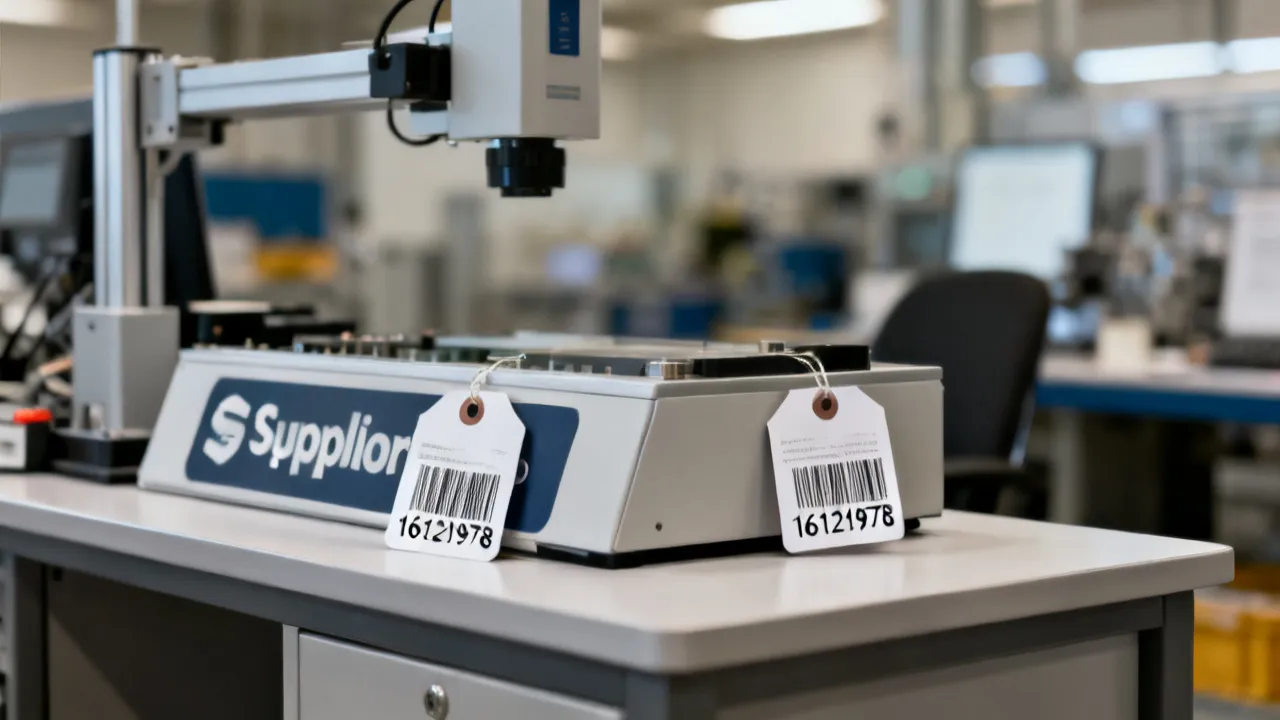
This guide explains how item 16121978 is typically handled across sourcing, compliance, and quality workflows, focusing on practical supplier evaluation rather than speculation. Objectively, the keywords relate to product identification, vendor selection, and logistics readiness. Background context outlines how procurement teams document specifications, verify traceability, and decide on lead-time commitments to reduce risk.

This guide explains how the identifier 949841yw334 can be used to support procurement, supplier verification, and inventory traceability. Objectively, 949841yw334 functions like a reference key within purchasing workflows, helping teams align orders, documents, and stock records. It also outlines practical conditions, requirements, and expert considerations for reliable adoption across suppliers and nearby operations.
This guide explains how to evaluate 949841yw334-related sourcing decisions, focusing on practical supplier comparison, documentation readiness, and total cost considerations. Background context covers what such codes typically represent in procurement workflows, why traceability matters, and how due diligence reduces delivery and compatibility risk for industrial buyers.

This guide explains 949841yw334 in practical, procurement-ready terms, focusing on how to evaluate supplier fit, quality controls, and delivery readiness. It then provides objective background on what codes like 949841yw334 typically represent in industrial documentation and how buyers can assess cost, compliance, and operational risk without relying on claims that can’t be verified.

This guide explains how to evaluate 24944608-related procurement decisions using supplier and pricing considerations. Objectively, it reviews what such identifiers typically represent in sourcing workflows, how cost is formed across categories, and why documentation, lead times, and quality controls matter for consistent outcomes.

This guide explains how to evaluate Sdfbn-related procurement decisions with an objective, supply-focused lens. Background context covers how keywords shape sourcing workflows, why pricing clarity matters, and what “supplier details” typically require for due diligence. The article also outlines practical decision conditions, a comparison overview, and reader FAQs to support careful selection.
