This guide explains how to interpret the sourcing code O5765317316 and align it with supplier documentation, pricing, and quality requirements. Objectively, codes like O5765317316 are used to standardize inventory, traceability, and procurement workflows. It also outlines practical conditions for verifying supplier fit, compliance, and documentation quality.
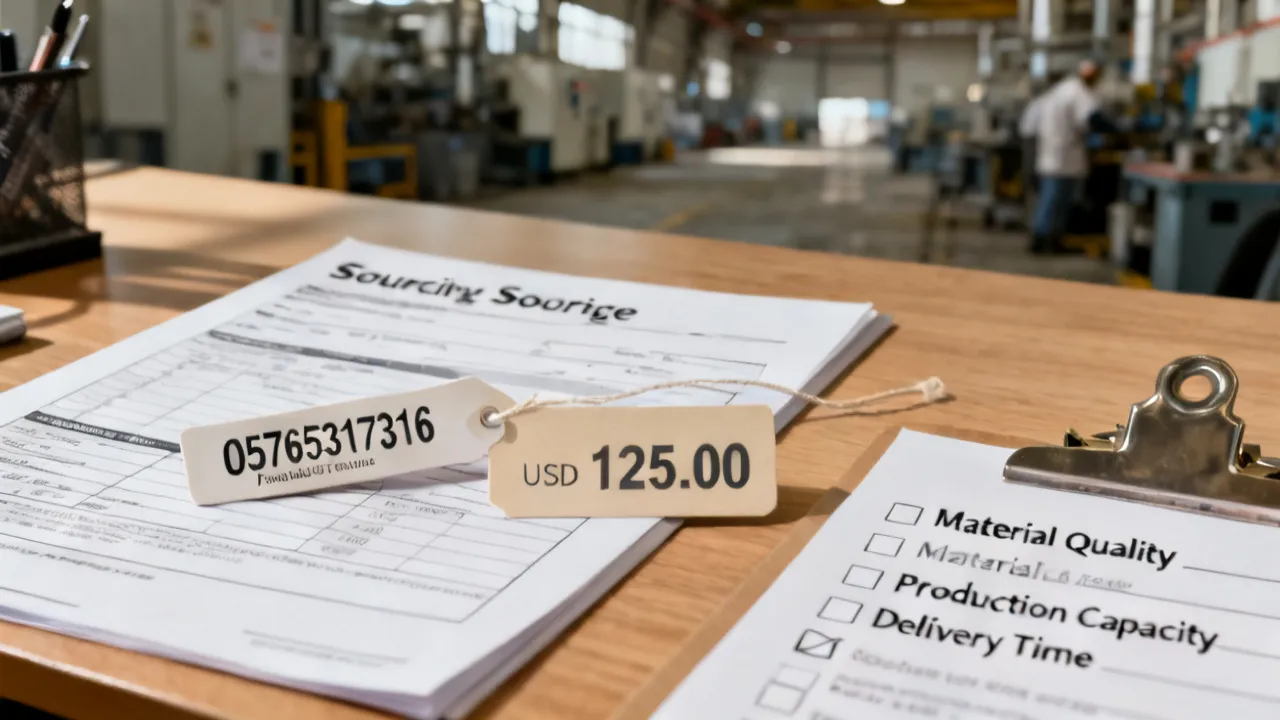
If you are working with the code O5765317316, the very important step is to match it to the correct supplier record—then confirm pricing, specifications, and documentation before purchase or production planning. In procurement practice, a code like this typically supports traceability across catalogs, inventories, and quality systems. The goal is simple: reduce ambiguity early so downstream operations (receiving, inspection, and use) remain stable and auditable.
Because procurement decisions often depend on the accuracy of identifiers and the reliability of supplier documentation, this article focuses on how to interpret a sourcing code, how to validate supplier claims, and how to structure requirements so the intended product or material is consistently delivered. This approach supports governance-minded sourcing and aligns with standard procurement controls used across manufacturing and supply-chain operations.
In very organizations, identifiers such as O5765317316 are designed to act as a “key” that links multiple internal systems: a catalog entry, a purchasing line, a quality record, and sometimes a logistics reference. While the exact meaning depends on the supplier or your organization’s ERP (Enterprise Resource Planning) setup, the identifier generally exists to prevent mixing similar items, revisions, or batches.
It is tempting to treat a code as “just a label,” but in mature procurement systems it functions more like a handle into a controlled data set. In other words, O5765317316 is often meant to be a deterministic pointer: if you use it correctly, you should be able to retrieve (or request) the correct drawing revision, material grade, compliance evidence, inspection method, and—when applicable—batch/lot identifiers.
From an industry standpoint, it’s rarely sufficient to treat a code as a label. Instead, treat it as a query handle—something you use to request authoritative data from the supplier: drawings or specification sheets, materials declarations, compliance certificates where relevant, packaging requirements, and delivery timelines.
To make this operational, ask yourself two questions every time you see O5765317316:
If you cannot quickly answer both, that’s not a reason to proceed; it’s a reason to pause and clarify. Many procurement problems—wrong material, incorrect revision, missing traceability—start when teams treat codes as self-explanatory.
Procurement documents often include a price line, but price alone cannot confirm suitability. When you encounter price information alongside O5765317316 in procurement records, the expert approach is to confirm:
A common hidden risk is that suppliers may quote on a description that seems “close,” while the identifier O5765317316 is mapped differently across systems. For example, an ERP might store a “spare part” code that differs from the supplier’s “catalog part” code used in manufacturing. If procurement binds itself to the wrong layer of data, you can accidentally purchase an item that looks similar but differs in tolerances, coatings, or material grade.
To keep decisions objective, require the supplier to align the quotation line item with the exact identifier O5765317316. If the supplier cannot clearly map the code to the pricing line item, it signals that your purchase may reference the wrong revision or category.
Practical steps that reduce pricing risk include:
When possible, treat price confirmation as a form of requirements confirmation: the price should be a consequence of the confirmed technical scope, not the substitute for it.
When sourcing is tied to an identifier like O5765317316, the supplier should be able to provide documentation that supports receiving, inspection, and compliance checks. Common categories include:
Even if your organization does not request the full set of documents for low-risk items, the code should still enable at least minimal traceability. If the supplier record for O5765317316 does not support traceability, you should treat it as a quality control gap to be closed before shipment.
It is also important to consider document “fitness,” not just document presence. For example:
To operationalize documentation quality, ask suppliers to explicitly reference O5765317316 (or the internal cross-reference) in the documents they provide. Document headers, file names, and certificate references should make it clear what the code corresponds to.
Additionally, consider version control of documents themselves. Even if the supplier gives you a PDF immediately, you should confirm whether it is the latest revision. Many procurement failures happen when a supplier provides an older document set that still aligns with a legacy code description.
Validation is where many procurement cycles succeed or fail. Instead of relying on verbal confirmation (“Yes, it matches”), use structured verification grounded in the identifier and the documentation. Practical examples include:
Structured verification becomes easier when your internal requirements are explicit and complete. If you only know “we need the part,” you will struggle to validate fit. But if you maintain an internal specification set—dimensions, materials, tolerances, required tests—you can compare supplier documents against clear acceptance criteria.
Here are additional validation tactics that complement the four examples above:
A key mindset shift is to treat validation as a repeatable checklist, not an ad-hoc conversation. When teams repeatedly do the same steps (revision confirmation, spec cross-check, labeling confirmation, traceability confirmation), you reduce the variability that leads to errors.
Identifiers are not merely administrative. They are operational tools that reduce error and enable accountability. Across global supply chains, structured identifiers help organizations manage:
In many industries, traceability is not optional. Even when the immediate customer does not ask for it, internal governance may require it for warranty support, safety investigations, and failure analysis. A code like O5765317316 is often the pivot that ties quality outcomes back to the procurement event and the manufacturing lot.
For context, organizations commonly reference international standards for quality management and traceability expectations. For instance, ISO 9001 emphasizes a process approach and control of documented information, which directly supports the discipline required when using codes such as O5765317316 in procurement.
But standards do not implement themselves. You implement standards through procurement controls, such as:
When done well, your use of O5765317316 becomes a governance mechanism: it ensures that the organization can prove what it ordered, what it received, and what it approved for use.
If your workflow involves suppliers or field operations “nearby,” the practical implication is that communication cycles may be faster and that receiving might follow local scheduling norms. In many nearby supplier relationships, teams often coordinate using local business hours, and paperwork may be exchanged quickly to prevent delays at dispatch. However, speed should never replace documentation checks—an identifier like O5765317316 still needs a consistent paper trail so that fast logistics does not introduce mismatch errors.
In practice, teams “nearby” may rely on shorter confirmation loops (“We reviewed it this morning”), but objective verification should remain consistent: the supplier record, the quotation mapping, and the technical documentation must match the code.
There are also subtle risks that can be worse when operations are “nearby.” For instance:
To counter these risks, implement fast-but-rigorous controls. For example, you can set a policy where “nearby” shipments still require: (1) pre-ship label photos for critical items, (2) packing lists that reference O5765317316, and (3) a document set stored against the purchase order line for audit readiness.
| Category | Supplier Should Provide for O5765317316 | Buyer Should Verify Before Release |
|---|---|---|
| Code mapping | Clear statement that O5765317316 maps to the exact product/revision quoted | Quotation line item, ERP entry, and document set reference the same code |
| Pricing basis | Price per unit, currency, packaging basis, delivery terms, and validity date | Unit conversions, incoterms impact, and total landed-cost assumptions are aligned |
| Technical specifications | Datasheets/drawings showing dimensions, materials, and tolerances | Specs match your internal requirements and approved drawings/standards |
| Quality documentation | Inspection/test certificates if applicable; traceability per batch/lot | Receiving inspection plan is feasible and traceability is confirmed |
| Compliance (if required) | Relevant declarations/certificates based on your industry needs | Compliance scope matches your contractual requirements and internal policies |
| Labeling & packaging | Label content, carton labeling rules, and any required documentation inside shipments | Receiving workflow can scan/record identifiers without manual re-entry errors |
To extend the usefulness of the table, consider that “verification” is not only a one-time action. For example, even after you verify documents before ordering, you still need to verify that the shipped goods and labels match at receiving. Documentation can be correct while physical packaging is wrong—especially if packaging is updated closer to dispatch.
For high-risk supply categories, add verification points such as: (1) pre-ship approval, (2) random sampling tests, and (3) label scan trials in your receiving system. The table can be adapted into a formal gate review checklist used by procurement and quality teams.
To further strengthen the process, you can add two optional steps for mature procurement programs:
Finally, ensure your system design supports auditability. If O5765317316 is used as a key, link it to the purchase order line, receiving record, and inspection results. When an issue arises later, you should be able to answer quickly: what version did we receive, from what lot, with what documentation?
To keep procurement decisions objective and defensible, establish baseline conditions that must be satisfied for items tied to O5765317316:
In practical procurement terms, “low ambiguity” means you can draw a straight line from requirement to evidence. It also means you have documented what to do when something does not match.
To make “conditions” more actionable, define the consequences of missing evidence. For example:
When these rules are defined in advance, the procurement team does not have to invent decisions under pressure. This improves both speed and quality.
From an industry expert viewpoint, the recurring failure mode is “identifier drift”—when a team believes a code is stable but the underlying product changes due to revision updates, packaging substitutions, or catalog relabeling. The issue is not that identifiers are “bad”; it’s that teams sometimes assume the identifier alone guarantees correctness.
Therefore, top practice is to treat O5765317316 as a trigger for verification rather than a guarantee. When verification is systematic—spec confirmation, pricing basis confirmation, traceability labeling confirmation—procurement becomes more resilient, and receiving disruptions drop.
Common ways identifier drift shows up in real purchasing environments include:
Another frequent mistake is “late verification.” Teams may validate documentation at the time of ordering, but they do not verify shipping labels, packing slips, or batch IDs. If the shipment is prepared by a different operational team than the one who negotiated the quote, errors can slip in right before dispatch.
To prevent late verification failures, encourage a receiving verification step that checks the key fields that matter for traceability and compliance. At a minimum, your receiving team should confirm that:
When these checks are repeatable and documented, you reduce both scrap and audit burden.
O5765317316 is an identifier used in procurement records to map a specific product or revision to a purchasing, catalog, and quality traceability workflow. Its exact definition depends on the supplier’s catalog or your organization’s internal system, so you should request the “code-to-spec” mapping from the supplier.
Because it may be a cross-reference, you should also ask how the supplier interprets O5765317316 internally. Some suppliers maintain a part number, a drawing number, and a manufacturing revision; your procurement code might relate to one of those layers. Understanding the supplier’s internal mapping prevents misalignment between what you requested and what they manufactured.
No. In objective procurement practice, the code should be used to request authoritative technical documents (datasheets/drawings) tied to the same identifier, then compare them to your approved requirements and acceptance criteria.
Incompatibility often arises when teams compare only high-level item descriptions. True compatibility depends on specific controlled characteristics—tolerances, materials, coatings, test conditions, and packaging labeling. The code should help you retrieve those characteristics reliably, not replace the comparison.
Confirm the unit of measure, packaging basis, currency, delivery terms, and quotation validity period associated with the line item that references O5765317316. If the code is not clearly aligned with the pricing line, ask for clarification before placing an order.
Additionally, check whether the quoted price includes documentation deliverables. In some contracts, pricing includes certificates and traceability outputs; in others, the supplier may charge separately. If you assume documentation is included but it is not, receiving might succeed operationally but quality governance might fail due to missing evidence.
Common requests include technical specifications (datasheets/drawings), traceability information (lot/batch), and any applicable inspection or test certificates depending on your quality requirements. The exact set should be based on risk and industry norms.
To tailor document requirements, define item criticality. For critical or safety-related items, require more documentation and potentially pre-ship review photos. For lower-risk consumables, you may accept a reduced set. But even for low-risk items, maintain at least basic traceability and revision clarity when the code is used for controlled procurement.
Equivalence should not be assumed. Require written confirmation that the proposed item matches all critical specifications and tolerances, and confirm that the revision level and traceability labeling remain consistent with the identifier-related requirements.
Also request evidence of equivalence that is specific, not generic. For instance, ask for side-by-side comparison tables, test results for the equivalent item, or updated drawing references that demonstrate the substitution does not violate requirements. If equivalence is claimed without such evidence, treat it as a red flag and escalate to engineering or quality authorities as your internal process dictates.
Yes. Quality management approaches grounded in international standards (for example, ISO 9001) emphasize controlled documentation, traceability practices, and verification of documented information—principles that directly support careful handling of procurement identifiers like O5765317316.
Even though standards may not mention a specific code, they provide the governance framework behind the controls you’re applying: managing documented information, verifying inputs, ensuring traceability, and controlling changes.
No. Even with nearby suppliers and shorter lead times, documentation checks remain essential. Quick logistics can increase the risk of label or revision mismatch, so the identifier O5765317316 should still be verified through consistent paperwork and traceability labeling.
Short lead times can create pressure to accept shipments quickly. That pressure is exactly why a checklist approach matters: it prevents teams from skipping steps simply because dispatch happens faster than usual.
While this guide is practical and decision-focused, the underlying governance concepts—control of documented information, process verification, and traceability discipline—are commonly addressed in established quality management frameworks. For readers who want foundational standards context, consult:
In many organizations, internal work instructions, supplier quality manuals, and contractual clauses also supplement these frameworks. If your organization uses controlled supplier onboarding or approval matrices, ensure O5765317316-related sourcing follows those requirements rather than informal agreements.
For procurement teams, the most important “source” is often your own controlled documentation: approved drawings, approved spec sheets, and defined acceptance criteria. Supplier documentation should align to those internal sources of truth.
When your procurement process centers on O5765317316, the top results come from disciplined mapping, verification of technical specifications, and careful alignment of pricing and traceability documents. Treat the code as a doorway to evidence—not as evidence by itself. With that mindset, you can reduce mismatch risk, improve receiving accuracy, and maintain a clear audit trail for future quality and supply-chain reviews.
To keep the sourcing cycle stable over time, institutionalize the process: use checklists, store documents linked to O5765317316, enforce revision control, and require traceability evidence that your receiving process can capture reliably. This is how procurement turns identifiers into operational reliability rather than administrative burden.





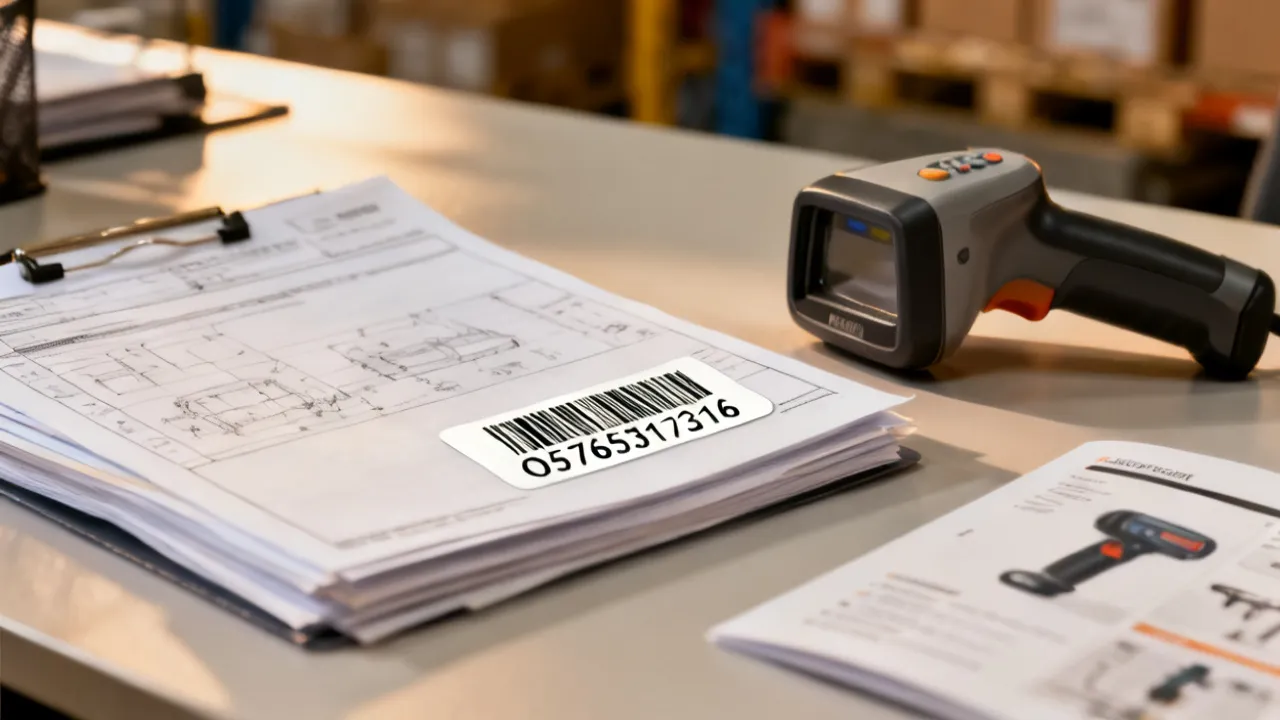
This guide explains how to interpret procurement-related code O5765317316 and organize supplier documentation for consistent ordering. Objectively, the keywords point to an identifier used in purchasing workflows, where accuracy affects traceability, inventory control, and audit readiness. Background context covers why supplier records and SKU-style codes matter across modern procurement.

This guide explains how to interpret the code O5765317316, evaluate sourcing options, and compare price drivers. Objectively, it covers what such identifiers typically represent in procurement systems, how suppliers document specifications, and why lead times, quality assurance, and packaging affect total cost. It also outlines requirements and conditions to reduce mismatch risk.
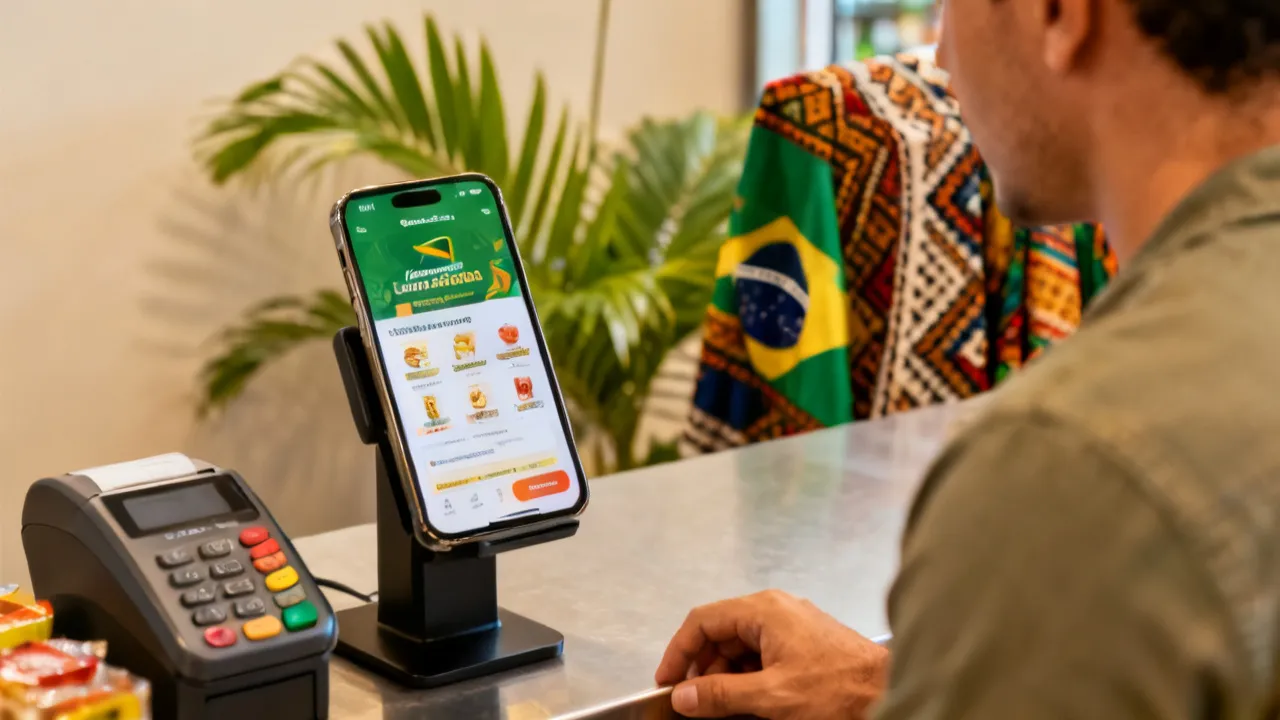
This guide explains how Digio Livelo works in practice, what you should verify before joining, and how to assess value across your spending habits. Digio Livelo is commonly discussed as a rewards-style experience linking financial services with Livelo’s loyalty ecosystem. In objective terms, it’s about aligning payment behavior and eligibility rules with redemption paths.

This guide explains how to assess a contact like 07915491784 for dependable supplier sourcing, pricing alignment, and service requirements. Objectively, the number can function as a business contact point for sales or procurement. The article discusses what to verify, how to compare supplier terms, and which conditions protect buyers during ordering and after-sales support.

This guide explains how to evaluate pricing and sourcing when contacting 07915491784 for service or supplier enquiries. It provides objective background on what phone-based lead handling means, how quoting typically works, and which details matter very to buyers. The focus is practical decision-making, risk control, and transparent requirements.

This guide explains what Xivido is, how it’s used in real-world workflows, and how buyers can evaluate options responsibly. It provides objective background on the concept behind Xivido, common integration considerations, and practical decision factors such as compatibility, supplier reputation, and total cost. The article also includes a comparison table, a step-by-step checklist, and FAQs.
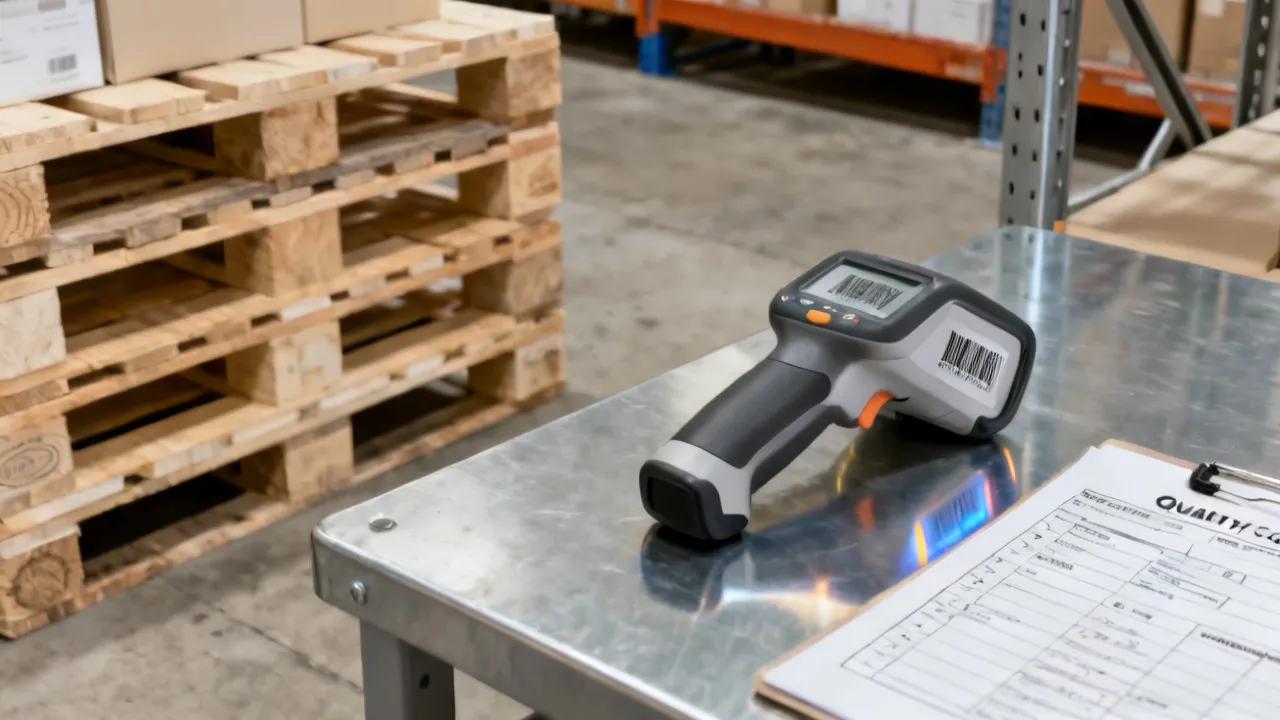
This guide explains how to interpret the supply number 39196734841, evaluate pricing signals, and compare supplier options for safer procurement decisions. Objectively, the terms typically relate to inventory tracking, order documentation, and vendor accountability in industrial sourcing. You’ll learn what to verify, how to assess conditions, and which checks reduce operational risk.

This guide explains how to evaluate item 39196734841 and related sourcing details to support dependable procurement decisions. Objectively, identifiers and supplier references help reduce mismatch risk in inventory and fulfillment workflows. You’ll learn practical screening criteria, compatibility checks, documentation expectations, and negotiation points for safer purchasing.
